






⚡ Quick Answer — GLP-1 and Muscle Loss
GLP-1 and muscle loss are genuinely linked — clinical trials show 20–40% of weight lost on semaglutide or tirzepatide can be lean mass rather than fat. The cause isn’t the drug directly attacking muscle; it’s the combination of a large calorie deficit, reduced protein intake from appetite suppression, and no resistance training signal telling the body to hold onto that tissue. Research shows structured strength training largely prevents this outcome.
GLP-1 medications like Ozempic and Wegovy have become some of the most widely prescribed drugs in the world, and the muscle loss conversation around them has moved from niche medical concern to mainstream news coverage. It’s a legitimate issue — but it’s also one of the most fixable side effects in modern medicine, if you know what actually causes it.
We went through the clinical trial data, the systematic reviews, and the emerging research on resistance training during GLP-1 therapy. Here’s what GLP-1 and muscle loss research actually shows, and exactly what protects you.
What Does GLP-1 and Muscle Loss Research Actually Show? (Featured Snippet)
GLP-1 and muscle loss research consistently finds that 20–40% of total weight lost on semaglutide or tirzepatide comes from lean mass rather than fat, based on data from major clinical trials. Tirzepatide appears to cause somewhat greater lean mass loss than semaglutide — roughly 1–2% more at three and twelve months in comparative studies. Critically, this outcome isn’t fixed: structured resistance training combined with adequate protein intake has been shown to substantially reduce or prevent it.
That last point is the one most headlines skip past. The drug creates the conditions for muscle loss; it doesn’t make it inevitable.
Why This Matters Right Now
The scale of this issue is part of what makes GLP-1 and muscle loss worth taking seriously. Roughly 1 in 8 American adults now report having used a GLP-1 medication, and prescriptions for weight management rose more than 700% between 2019 and 2023. That’s a huge population making body composition changes at once — and national data shows only about 30% of adults already meet basic muscle-strengthening exercise guidelines before starting.
For hybrid athletes specifically, this intersects directly with training principles already covered on this site. Whether you’re on a GLP-1 for medical reasons or simply want to understand the research, the underlying physiology — protecting muscle during a calorie deficit — is the same problem hybrid training already solves for.
🚨 Important
This article covers training and nutrition strategies, not medical guidance about GLP-1 medications themselves. Never start, stop, or adjust a prescription based on fitness content. Talk to your prescribing doctor about any concerns regarding muscle loss, dosing, or side effects.
Lean Mass vs. Muscle: An Important Distinction in GLP-1 and Muscle Loss Research
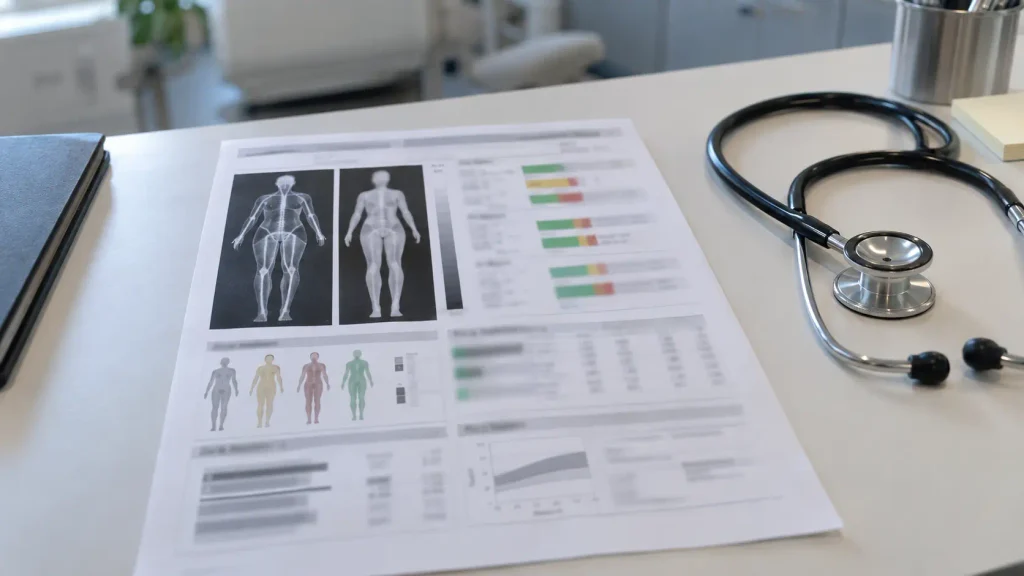
Most GLP-1 and muscle loss headlines blur an important technical distinction. The vast majority of clinical trials measure “lean mass” using DXA scans — a category that includes muscle, but also water, connective tissue, organs, and skin. It is not a direct measurement of skeletal muscle specifically.
A 2025 review published in the European Journal of Clinical Investigation made this point directly: GLP-1 receptor agonists reduce fat mass more than lean mass overall, and functional strength measures — how much people can actually lift or how fast they can walk — appear largely preserved across the reviewed studies. That’s a meaningfully more reassuring picture than “you’ll lose 40% muscle,” even though the lean mass numbers themselves are accurate.
None of this means the concern is overblown. It means the practical response to GLP-1 and muscle loss — resistance training and protein — matters more than the specific percentage attached to any headline.
Why Resistance Training Changes the Outcome
This is the part of the GLP-1 and muscle loss conversation with the clearest evidence behind it. A 2024 study published in The Lancet Regional Health, reviewed alongside broader research on incretin-based therapies, found that progressive resistance training during GLP-1 treatment preserved lean mass without requiring any additional medication, cost beyond a gym membership, or added risk.
The mechanism is straightforward: your body doesn’t preserve tissue it doesn’t detect a use for. Resistance training sends a direct physiological signal that muscle is actively needed, which shifts how the body allocates the metabolic cost of a calorie deficit — protecting muscle preferentially over fat, rather than breaking down whichever tissue is easiest to mobilize.
💡 Training Tip
You don’t need a complicated program to get this benefit. Our guide to the minimum effective dose for strength training covers how little volume is actually required to protect strength during a period of reduced calorie intake.
How Much Protein Do You Actually Need?
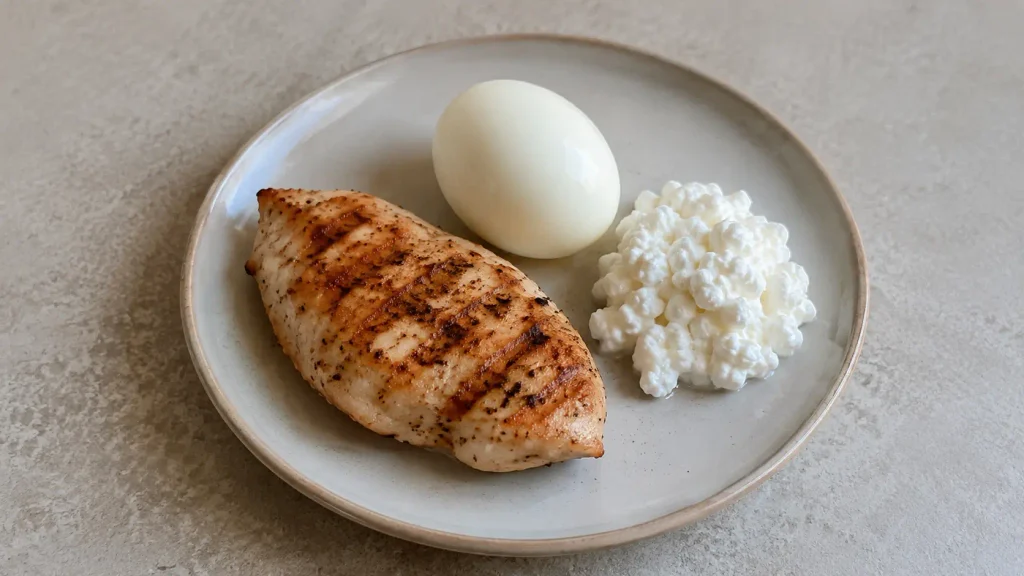
Appetite suppression is the other half of the GLP-1 and muscle loss equation. Eating less overall almost always means eating less protein too, unless it’s planned deliberately — and protein intake is one of the two levers, alongside resistance training, that determines how much of a weight-loss deficit comes from muscle versus fat.
The macro targets that apply here aren’t different from general hybrid athlete guidelines, they just require more intention given a smaller total food volume. Our guide to nutrition for hybrid athletes covers the specific protein ranges — generally 1.6–2.2 g/kg of bodyweight — that support muscle retention during periods of higher training or reduced calorie intake.
| Factor Missing | Effect on GLP-1 and Muscle Loss | Fix |
|---|---|---|
| Resistance training signal | Body has no reason to retain muscle | 2–3 strength sessions/week |
| Adequate protein intake | Less raw material for muscle repair | 1.6–2.2 g/kg bodyweight daily |
| Both combined | Largest reported lean mass loss | Address both simultaneously, not sequentially |
The Minimum Effective Dose Still Applies Here
One of the most common reasons people on GLP-1 medications skip resistance training is the assumption that meaningful protection requires an hour-plus gym session multiple times a week — on top of already-reduced energy from a large calorie deficit.
That assumption doesn’t match the research. As covered in our guide to the minimum effective dose for strength training, even a small number of sets performed close to failure, 2–3 times per week, is enough to meaningfully protect strength and muscle. For someone managing lower energy on a GLP-1, that lower time and effort requirement is directly relevant — the barrier to entry for meaningful protection against GLP-1 and muscle loss is much smaller than most people assume.
The Hidden Trap: Why Activity Often Drops on GLP-1
Here’s a counterintuitive finding that adds another layer to the GLP-1 and muscle loss picture. Real-world data from fitness trackers, presented at a major endocrinology conference in 2026, found that daily step counts and moderate-to-vigorous activity actually declined after people started GLP-1 medications — even as their weight dropped.
That reverses the usual pattern. Weight loss from other causes typically increases spontaneous movement, as people feel lighter and more capable. GLP-1s appear to work differently, likely because reduced appetite and lower energy intake also blunt the motivation and energy available for movement generally, not just eating.
⚠️ Common Mistake
Assuming weight loss on the scale means activity is automatically increasing too. On GLP-1 medications specifically, the opposite can be true — deliberately scheduling movement matters more than usual, not less.
6 Mistakes People Make With GLP-1 and Muscle Loss
Most of the muscle loss attributed to GLP-1 medications traces back to a handful of avoidable gaps rather than the drug itself.
- Treating the medication as a replacement for exercise. Physicians consistently report patients dropping activity once appetite and weight start declining on their own.
- Under-eating protein because appetite is suppressed. Lower total food intake needs deliberate protein prioritization, not passive eating.
- Skipping resistance training due to low energy. The minimum effective dose is small enough to fit even reduced-energy weeks.
- Chasing an aggressive deficit on top of the medication’s effect. Combining a large drug-induced deficit with additional restriction accelerates lean mass loss.
- Confusing “lean mass” headlines with pure muscle loss. Some of the reported loss includes water and other tissue, not muscle specifically.
- Waiting until muscle loss is visible to act. Resistance training works best started alongside the medication, not after strength has already declined.
FAQ
How much of the weight lost on GLP-1 medications is actually muscle?
Clinical trial data generally shows 20–40% of total weight loss comes from lean mass, though this measure includes more than just skeletal muscle, and functional strength often appears better preserved than the raw percentage suggests.
Can resistance training fully prevent GLP-1 and muscle loss?
Research suggests it substantially reduces the effect and can help preserve strength and function, though individual results vary based on training consistency, protein intake, and the size of the calorie deficit.
Do I need more protein than a typical hybrid athlete while on a GLP-1?
The target range is similar — generally 1.6–2.2 g/kg of bodyweight — but hitting it takes more deliberate planning given how much appetite suppression reduces total food intake.
Is tirzepatide worse for muscle loss than semaglutide?
Comparative studies show somewhat greater lean mass loss with tirzepatide — roughly 1–2% more at three and twelve months — though the difference is modest and both respond to the same resistance training and protein strategies.
Should I talk to my doctor about GLP-1 and muscle loss?
Yes. This article covers general training and nutrition strategies, not medical advice — any concerns about dosing, side effects, or your specific treatment plan should go through your prescribing physician.
Quick Action Plan
- Start resistance training alongside your medication rather than waiting until strength feels like it’s declining.
- Aim for 2–3 strength sessions per week, using the minimum effective dose approach if energy is limited.
- Set a daily protein target of 1.6–2.2 g/kg bodyweight and prioritize protein-dense foods given reduced overall appetite.
- Track your activity level deliberately — don’t assume movement is increasing just because weight is decreasing.
- Avoid stacking an aggressive additional calorie deficit on top of the medication’s natural appetite suppression.
- Reassess with your doctor if you notice declining strength, persistent fatigue, or other functional changes, not just the number on the scale.
Bottom line: GLP-1 and muscle loss is a real, well-documented risk — but the research is equally clear that resistance training and adequate protein largely offset it. For the specific programming and nutrition details, see our Strength & Conditioning section.






Leave a Reply