

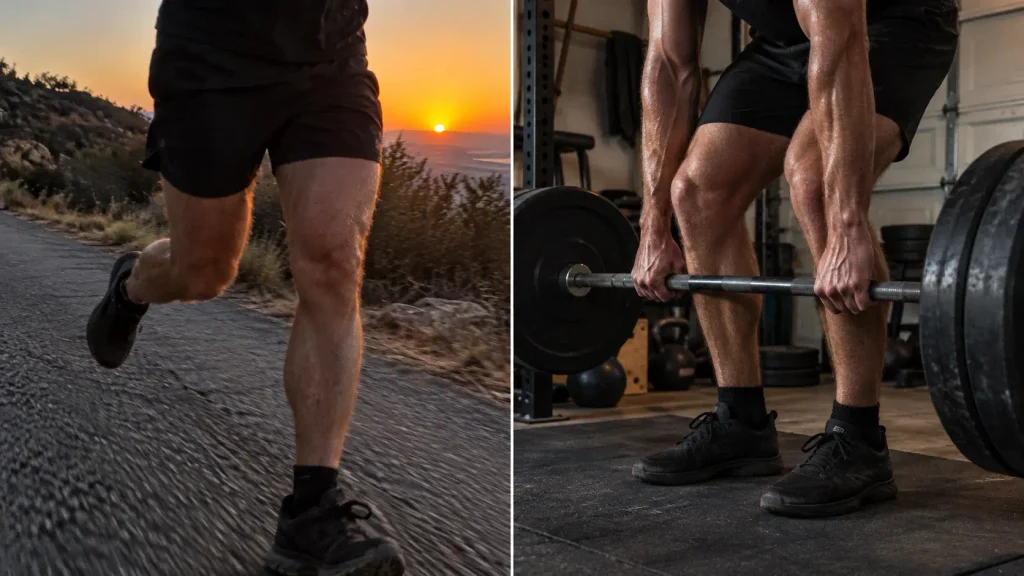





⚡ Quick Answer — CrossFit Knee Sleeves
CrossFit knee sleeves are worth wearing for warmth, comfort, and a feeling of stability, but research suggests they do not add weight to your squat. Pick thickness for the session, size them snugly, and match the material to your workout: thick neoprene for heavy squats, thinner or knitted sleeves for high-rep and mixed training days.
Every box has that one athlete who squats in thick black sleeves, and another who swears they never need them. CrossFit knee sleeves are one of the most popular and most misunderstood pieces of gear in training, and the right pair depends far more on your workout than on hype.
We reviewed three sources for this guide: a 2021 laboratory study on knee sleeves and back squats, a gear and research overview from BarBend, and a Range of Motion article on proprioception. This article turns them into five clear rules for choosing and using CrossFit knee sleeves.
What Are CrossFit Knee Sleeves?
Before comparing materials and brands, it helps to define the gear clearly, because “sleeve” covers products that feel very different on the knee.
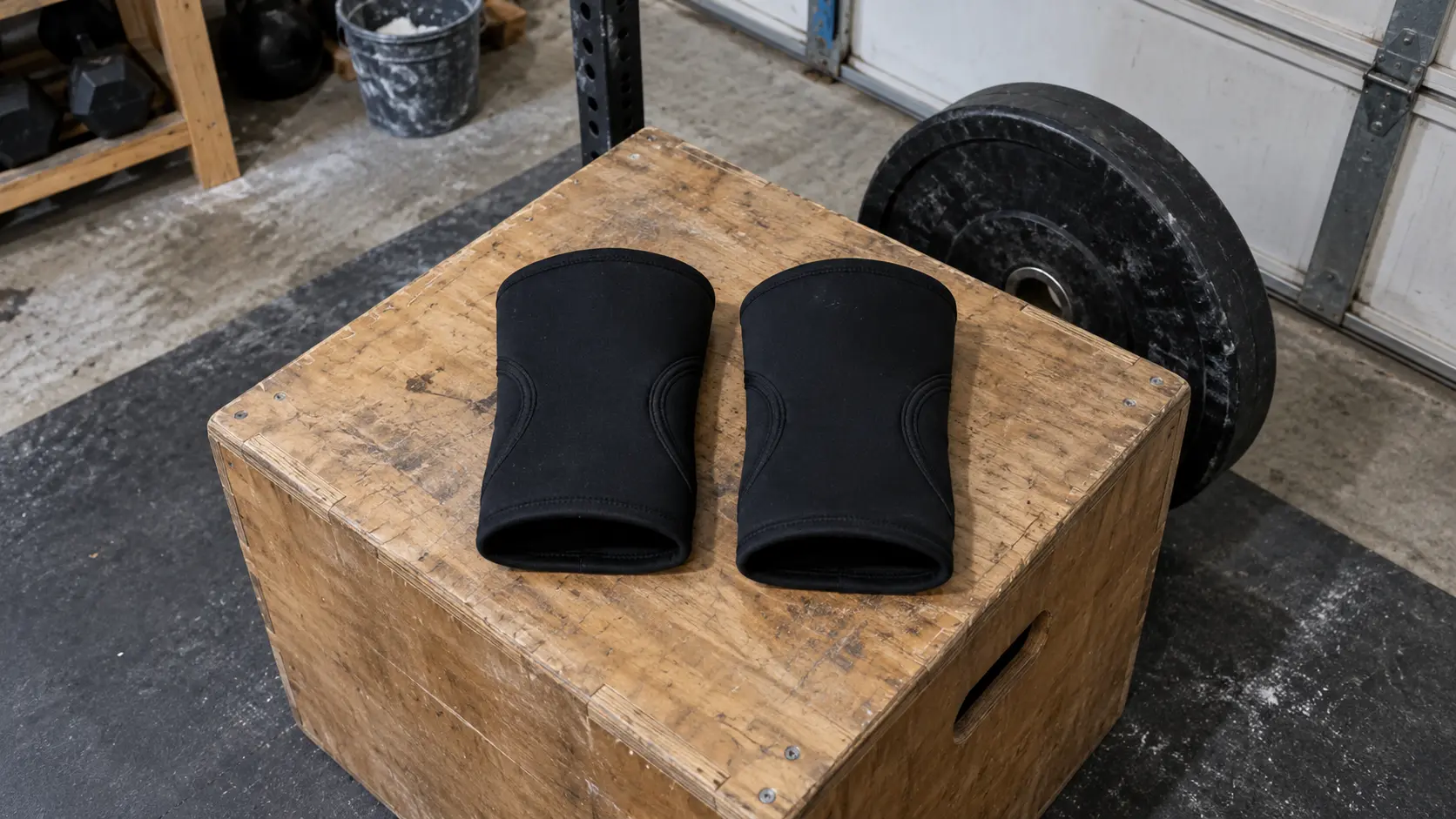
CrossFit knee sleeves are snug, stretchy tubes worn over the knee during squats, lunges, Olympic lifts, and mixed workouts. They are usually made of neoprene or knitted fabric, and they mainly add warmth, compression, and a feeling of stability rather than rigid support like a brace.
In practice, CrossFit knee sleeves sit between going bare and wearing a hinged brace. They slide on easily, they do not lock the joint, and most athletes can wear them for a whole session, from the warm-up to the last wall ball.
💡 Training Tip
Put your CrossFit knee sleeves on during your warm-up, not just before your top set. Warm knees feel looser, and you will notice quickly whether the sleeve rolls, pinches, or slides down.
Do CrossFit Knee Sleeves Actually Work?
The honest answer is “it depends on what you expect”. If you hope a sleeve will add 20 pounds to your squat, the research is not encouraging. If you want warmth and confidence in the bottom position, many athletes find them useful.
A 2021 study in the journal Human Movement tested 15 resistance-trained men and women in back squats, with and without sleeves. The authors reported that the maximal weight lifted did not improve with sleeves, and that frontal plane knee mechanics did not differ between conditions. They also saw reduced gluteus maximus activation on the way up with sleeves, though the study was small and used one sleeve type, so it should not be treated as the final word.
BarBend’s overview of the research describes mixed results, with some studies suggesting a marginal improvement in squat one-rep max and others finding no effect on jumps or leg extensions. It also notes that sleeves are mostly used for warmth and perceived stability. A Range of Motion article suggests sleeves may improve joint position awareness through skin pressure, but the author frames this as a hypothesis, not proven fact.
🚨 Important
Sleeves are not a treatment for knee pain or injury. If your knee hurts, swells, clicks painfully, or gives way, stop training that movement and see a qualified professional rather than covering the problem with gear.
The practical takeaway is simple. Treat CrossFit knee sleeves as comfort and confidence gear, buy them for how they feel and fit, and do not expect them to rescue poor technique or fix a knee that needs rest.
5 Smart Rules for Choosing CrossFit Knee Sleeves
The five rules below move from the most important decision, what you will actually use them for, down to the small habits that keep your gear working. Most people only need to get the first three right.
1. Match the Thickness to Your Workout
Neoprene CrossFit knee sleeves usually range from about 3 to 7 millimeters, according to BarBend. Thicker sleeves feel stiffer and warmer, which suits heavy back squats and front squats. Thinner sleeves move more freely, which suits high-rep workouts, lunges, and running.
If your week is mostly mixed workouts, a 5 millimeter sleeve is a common middle ground, though this is a general guideline rather than a rule. If you mainly squat heavy, 7 millimeters is the standard pick, and if you run or jump a lot, go thinner.
2. Get the Size Right Before Anything Else
A sleeve that is too loose slides down and does nothing. One that is too tight can leave deep marks, tingling, or numbness behind the knee. Measure around the center of the kneecap with the leg slightly bent, then use the brand’s chart. Some brands publish a detailed guide, such as the MAXHOV knee sleeve size guide.
The BarBend overview notes that a tighter sleeve does not necessarily produce a bigger effect than a regular-sized one. So the goal is snug and comfortable, not as tight as you can force it on. If you feel pins and needles, remove the sleeve.
3. Choose the Material for the Session
Thick neoprene traps heat, which is great on a cold morning and miserable in a summer WOD. Knitted fabric is lighter, breathes better, and rolls less during running or jumping. Each type has a place, and many athletes own two pairs of CrossFit knee sleeves.
The table below compares the three common options in plain terms. These are general tendencies, and individual products vary.
| Type | Feel | Warmth | Best For |
|---|---|---|---|
| 7 mm neoprene | Stiff and tight | High | Heavy squats |
| 5 mm neoprene | Firm but flexible | Moderate to high | Mixed lifting and WODs |
| Knitted compression | Light and stretchy | Low to moderate | High-rep days, running, long sessions |
4. Check the Rules Before You Compete
For everyday training, CrossFit knee sleeves are generally accepted, and BarBend notes that athletes are typically allowed to wear them in CrossFit. In powerlifting, rules differ by federation. USA Powerlifting, for example, requires single-ply neoprene sleeves no thicker than 7 millimeters.
If you are entering a local competition or a different sport, read the rulebook or ask the organizer. Our overview of hybrid fitness competitions explains how formats differ, so you know what gear questions to ask.
5. Test, Wash, and Rotate Your Pair
Wear new sleeves for a lighter session first, so you can spot rubbing or slipping before a heavy day. Wash them according to the label, let them air dry, and avoid wearing them all day. Skin needs time to breathe, and sweat plus friction can cause irritation.
If you train twice a day or compete often, rotating two pairs keeps them fresher and extends their life. When the fabric stretches out or the edges curl, replace them. A worn sleeve rolls down and stops being useful.
Knitted Alternatives to Neoprene CrossFit Knee Sleeves
Neoprene is not the only option anymore. A newer category of knitted compression sleeves aims at athletes who lift and run in the same week, and who find thick neoprene too hot or too bulky for longer sessions.
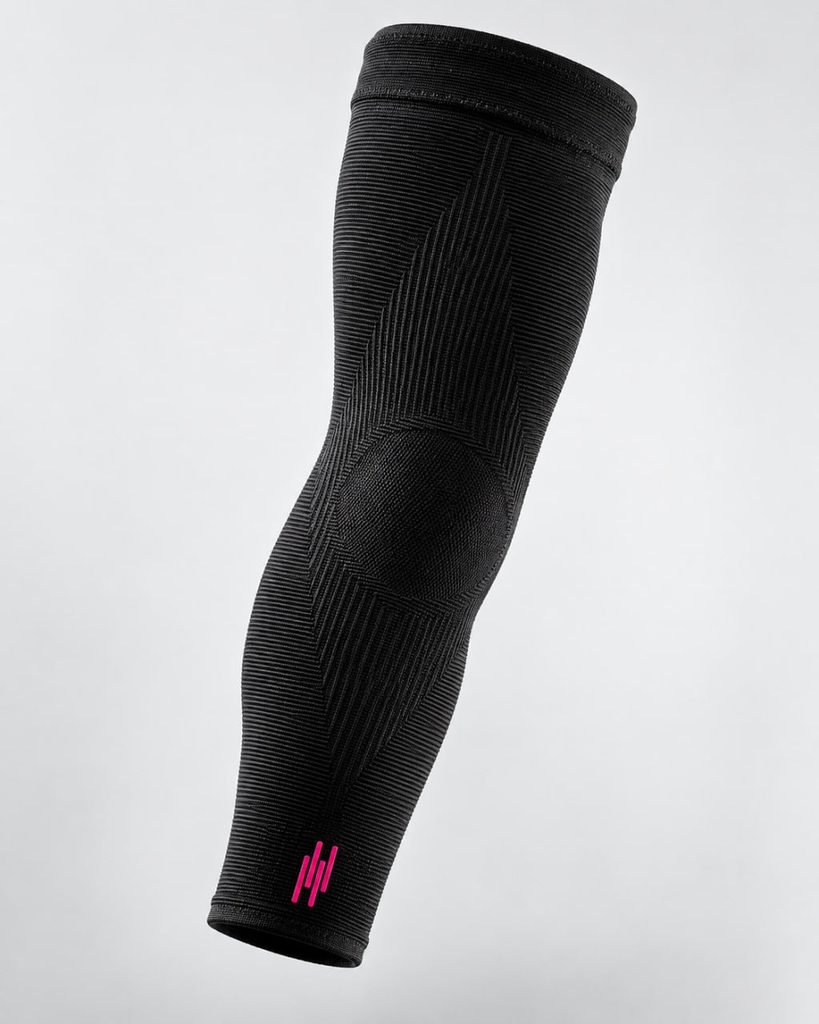
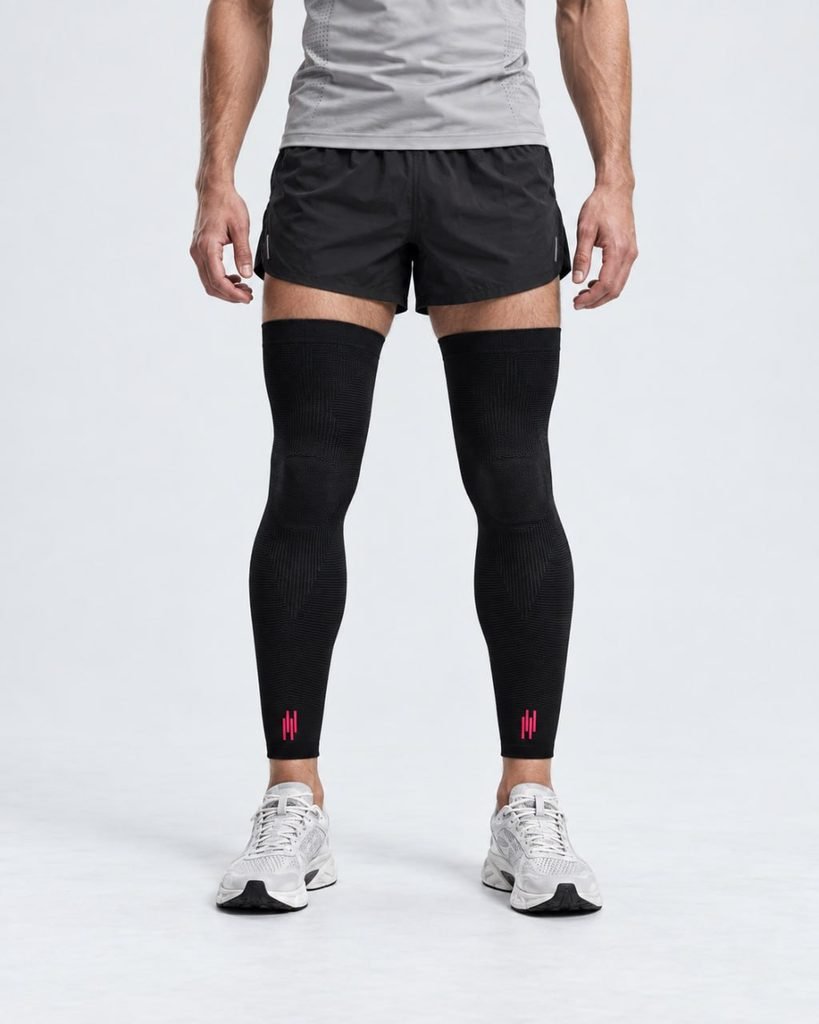
One example is MAXHOV, a performance compression brand built around hybrid training. Its sleeve is a full-length knitted design, as the photos below show, with a shaped zone around the knee and a graduated compression level that the brand lists at 20 mmHg. The fabric is thinner and lighter than neoprene, which makes it easier to wear through a long workout or a run.
💡 Transparency Note
MAXHOV is affiliated with HybridPace, so we are not a neutral reviewer of it. We have kept this section to facts you can check on the product page, and we still recommend choosing any sleeve by fit and use case.
Knitted sleeves are not a replacement for every job. They do not give the stiff rebound that a 7 millimeter neoprene sleeve gives in a heavy squat, and no research we reviewed shows that either type improves your max. Where they make sense is on higher-volume days, mixed conditioning, and running sessions, where breathability matters more than stiffness.
✅ Want a Knitted Option?
If your week mixes lifting, conditioning, and running, browse the men’s knee sleeves or the women’s knee sleeves on the MAXHOV store, then compare them with the neoprene options above and pick based on how you train, not on the brand.
When to Wear CrossFit Knee Sleeves in Your Week
Gear works best when it follows your programming. Wearing the same sleeves for every session is the easiest way to waste them. The sample week below shows how many athletes rotate CrossFit knee sleeves by session type.
| Day | Session | Sleeve Choice |
|---|---|---|
| Monday | Heavy back squats | Thick neoprene |
| Tuesday | Easy run or bike | Knitted or none |
| Wednesday | Mixed WOD with wall balls and lunges | 5 mm neoprene or knitted |
| Thursday | Olympic lifts | Neoprene |
| Friday | Upper body and core | None |
| Saturday | Long mixed session | Knitted for comfort |
| Sunday | Rest | None |
This is an example, not a prescription. If you combine lifting and running in the same week, our guide to running after leg day explains how to order sessions so your knees and legs stay fresh.
Using CrossFit knee sleeves on only your hardest days also keeps your knees working normally on easy days. Our rules for combining strength training and cardio cover how to plan the week around those heavy and light sessions.
Signs Your CrossFit Knee Sleeves Do Not Fit
A poor fit can ruin a good sleeve. Pay attention to how your legs feel during and after training, and adjust early rather than pushing through discomfort.
- The sleeve slides down within a few reps or rolls at the top edge.
- You feel tingling, numbness, or a cold foot after wearing it.
- Deep red marks stay for a long time after you take it off.
- The fabric bunches behind the knee when you squat deep.
- You notice skin irritation or a rash where the edges rub.
If you notice two or more of these, change the size or switch to a different material. If symptoms like numbness persist after you remove the sleeve, talk to a qualified professional.
Common Mistakes With CrossFit Knee Sleeves
Most mistakes come from expecting too much from the gear or from buying the wrong type for the job. These are the errors that appear most often.
- Buying thick neoprene for every workout. It overheats in long conditioning pieces and can feel restrictive in running.
- Wearing them all day. Skin and joints do not need constant compression.
- Choosing a size that is too tight. More pressure does not mean more benefit.
- Relying on sleeves to hide pain. Pain is a signal, and gear does not fix its cause.
- Skipping mobility and strength work. Strong hips, ankles, and quads protect your knees far more than any sleeve.
⚠️ Common Mistake
Adding load because the sleeves make your knees feel stable. A sleeve changes how a movement feels, not what your tissues can handle, so keep your progression rules the same with or without gear.
Where to Go Next
Sleeves are one part of a smart gear setup. Our guide to the best hybrid training shoes for lifting and cardio covers the other piece that matters most for your knees, and our 12-week hybrid training plan shows how to build a week around heavy and light days.
For more equipment advice, browse the Gear & Equipment category, and if you worry about overdoing it, read our recovery rules for hybrid athletes.
For the research behind this guide, see the study Wearing knee sleeves during back squats does not improve mass lifted or affect knee biomechanics and BarBend’s overview on whether knee sleeves increase your squat.
Quick Action Plan
Use this short checklist to choose and use CrossFit knee sleeves over the next two weeks.
- List your three most common sessions: heavy lifting, mixed WODs, and running or long conditioning.
- Pick a thickness or material for each, starting with one pair for your most frequent session.
- Measure your knee with a flexible tape and check the brand’s size chart, such as the MAXHOV size guide.
- Wear the new pair for a light session first and check for slipping or numbness.
- Keep your usual loading rules, and do not add weight just because the sleeves feel supportive.
- Wash, air dry, and replace the pair when it stretches out or starts to roll.
FAQ
Do CrossFit knee sleeves help you squat more?
Probably not by much. A 2021 study in trained lifters found no improvement in maximal weight lifted with sleeves. Many athletes still like them for warmth and a feeling of stability, so use them for comfort rather than expecting a bigger number.
What thickness is best for CrossFit knee sleeves?
Seven millimeters suits heavy squatting, five millimeters is a common all-round choice, and thinner or knitted options suit high-rep work and running. Choose based on your most frequent session and how much heat you can tolerate.
Should I wear CrossFit knee sleeves every workout?
Not necessarily. Using them on heavy or long sessions is enough for most people. Skipping them on easy or upper body days gives your skin a break and keeps your knees used to moving without extra gear.
Are CrossFit knee sleeves allowed in competition?
They are generally allowed in CrossFit-style events, but rules vary by organizer and sport. USA Powerlifting, for example, limits sleeves to single-ply neoprene no thicker than 7 millimeters. Always check the specific rulebook before you compete.
Are knitted sleeves a good alternative to neoprene CrossFit knee sleeves?
For high-rep workouts, running, and long sessions, many athletes prefer lighter knitted sleeves because they breathe better and roll less. For heavy squats, thick neoprene is still the usual choice. You can compare the men’s and women’s MAXHOV knee sleeves with your own use case.
How tight should CrossFit knee sleeves be?
Snug but comfortable. You should be able to squat deeply without pinching or numbness. If it leaves deep marks, causes tingling, or restricts your range of motion, the sleeve is too tight or the wrong size.






Leave a Reply