






⚡ Quick Answer — Fitness Trackers for Hybrid Athletes
The best fitness trackers for hybrid athletes track strength sessions with the same depth as running or cycling — not just steps and calories. The Garmin Forerunner 970 currently offers the most complete balance of strength and cardio metrics, while Whoop 5.0 leads on recovery and training load if you don’t need a screen, and Apple Watch Ultra 3 is the strongest option for iPhone users.
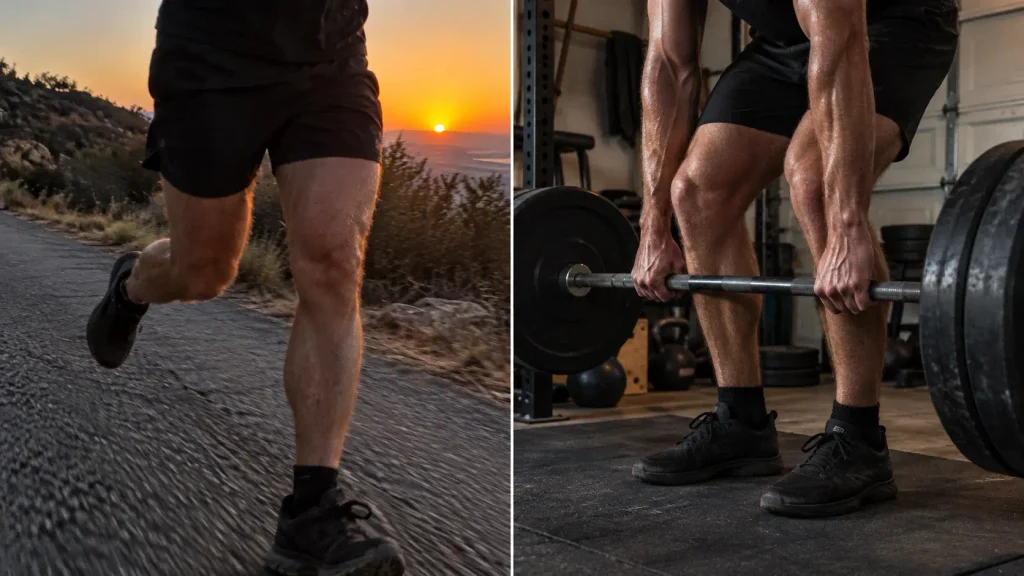
Most fitness trackers are built for one type of athlete. Running watches obsess over pace and VO2max. Fitness bands count reps badly and cardio barely at all. A hybrid athlete needs both halves tracked properly, and until recently, almost nothing did that well.
We compared the current market’s most relevant wearables against what actually matters for combined strength and cardio training, to find which fitness trackers for hybrid athletes are worth wearing and which trade-offs each one makes.
What Should a Hybrid Athlete Look for in a Tracker? (Featured Snippet)
The best fitness trackers for hybrid athletes need to handle these things well at the same time:
- Accurate strength tracking — sets, reps, and rest periods, not just “activity minutes.”
- Real cardio metrics — VO2max, pace, heart rate zones, and GPS accuracy for running or cycling.
- Training load and recovery insight — some way of showing accumulated fatigue across both types of training, not just one.
- Sleep tracking — since sleep quality affects both strength and cardio recovery.
- Battery life that survives your actual week — daily strength sessions plus long cardio efforts drain trackers faster than single-sport use.
No current fitness tracker for hybrid athletes nails all five perfectly. Every option below makes a different trade-off, which is why the right pick depends on which side of your training you want tracked more precisely.
Why This Matters More Than Ever in 2026
This isn’t a niche concern anymore. The American College of Sports Medicine’s 2026 Worldwide Fitness Trends survey ranked wearable technology as the #1 fitness trend for the third consecutive year, with roughly 36–44% of adults now owning some form of fitness tracker.
That widespread adoption is exactly why the gap matters for fitness trackers for hybrid athletes specifically. As more athletes rely on wearables to guide training decisions, a tracker that only tells half the story — cardio without real strength data, or vice versa — can quietly steer a hybrid athlete’s programming in the wrong direction.
💡 Training Tip
A tracker is only as useful as the training principles behind it. Pair whichever device you choose with a real structure, like our 12-week hybrid training plan, rather than letting the watch dictate your programming on its own.
The 5 Best Fitness Trackers for Hybrid Athletes
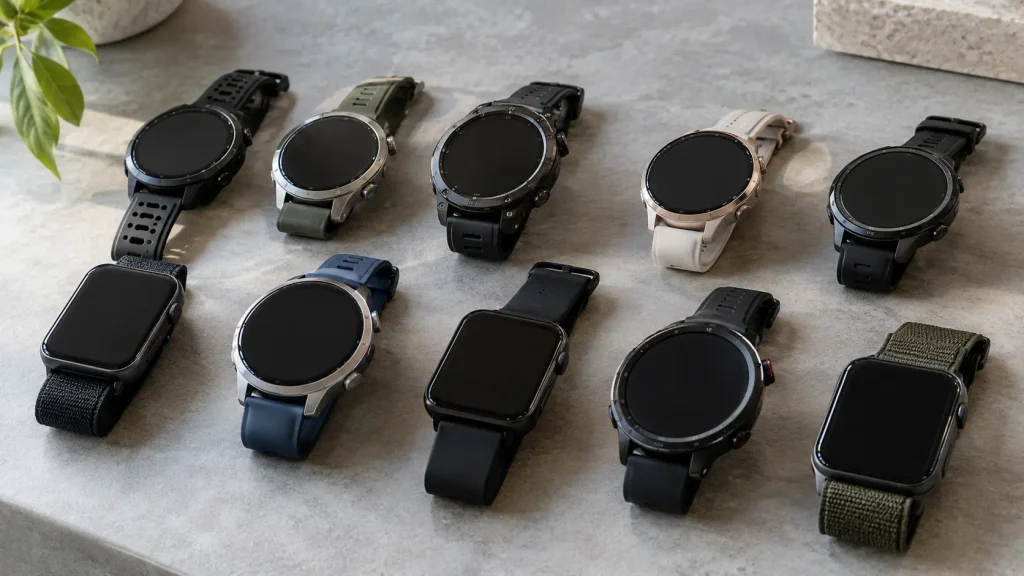
These five wearables currently offer the strongest combination of strength and cardio tracking on the market, each with a different strength.
| Tracker | Best For | Screen | Subscription |
|---|---|---|---|
| Garmin Forerunner 970 | Overall balance | Yes (AMOLED) | No |
| Whoop 5.0 | Recovery & training load | No | Yes |
| Apple Watch Ultra 3 | iPhone users | Yes | No |
| Coros Pace 4 | Best value | Yes | No |
| Garmin Vivoactive 6 | Budget option | Yes | No |
Garmin Forerunner 970 — Best Overall
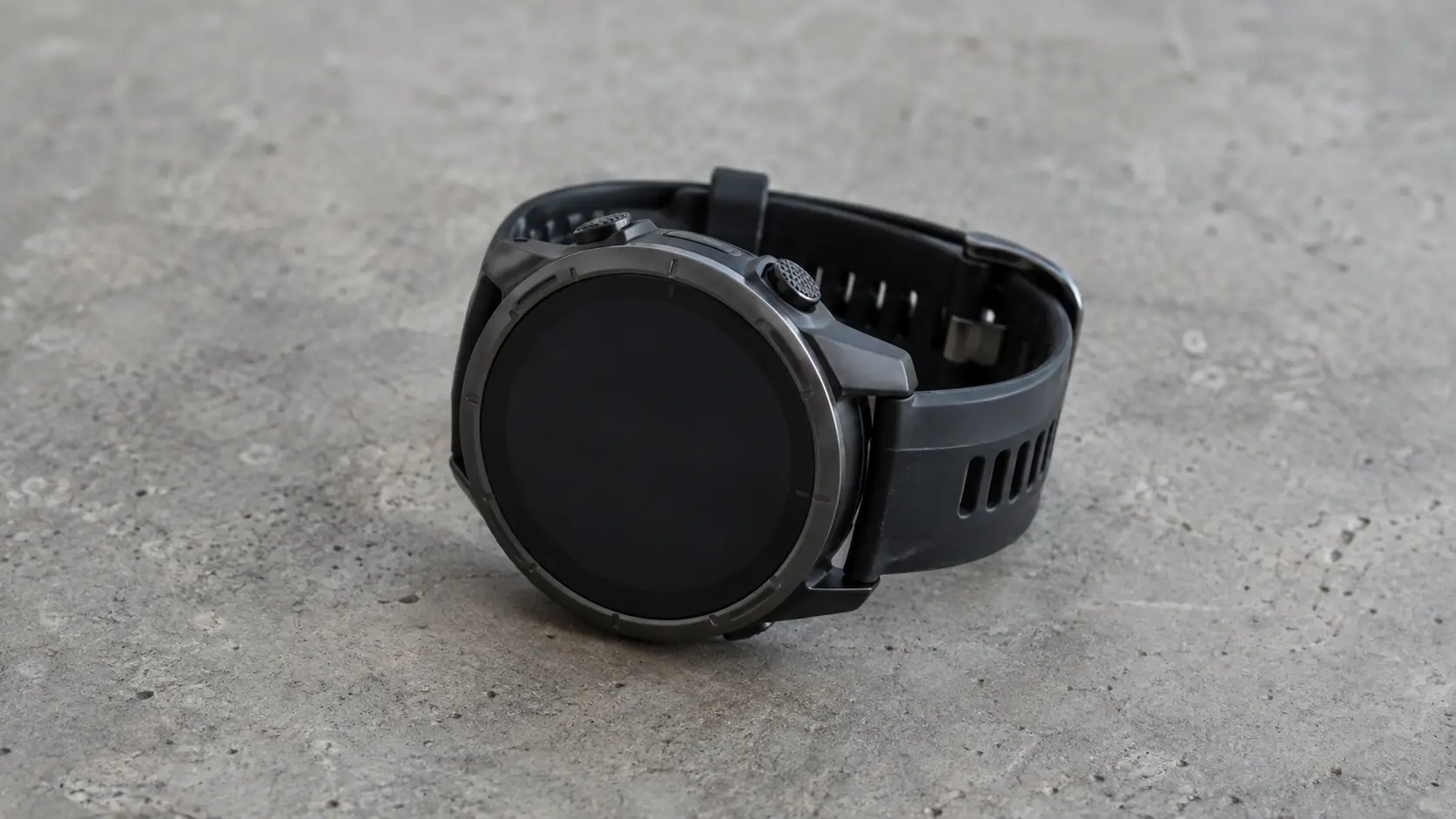
The Forerunner 970 sits at the top of Garmin’s running-focused lineup, but it’s the depth of its strength training tools — combined with elite-level cardio metrics like VO2max, training load, and recovery time — that makes it the most balanced fitness tracker for hybrid athletes currently available. Garmin Connect’s structured workout library covers both running plans and strength sessions, which is rare in a single ecosystem.
Whoop 5.0 — Best for Recovery and Training Load
Whoop takes a completely different approach: no screen, no GPS pace display, just a subscription-based deep dive into recovery, strain, and sleep. Among fitness trackers for hybrid athletes, Whoop’s strain score stands out because it treats strength and cardio sessions as contributors to the same daily load number, which is exactly the kind of combined-fatigue tracking most single-sport wearables ignore. The trade-off is the ongoing subscription cost and the lack of an on-wrist display for real-time pace or heart rate.
Apple Watch Ultra 3 — Best for iPhone Users
For anyone already in the Apple ecosystem, the Ultra 3 is a credible alternative to Garmin for most hybrid athletes, short of ultra-endurance specialists. Dual-frequency GPS, a bright always-on display, and Apple’s expanding workout tools — including custom structured workouts — cover both strength and cardio reasonably well, backed by the smartwatch features Garmin and Coros don’t offer.
Coros Pace 4 — Best Value
The Pace 4 delivers dual-band GPS accuracy and long battery life at a price well below its Garmin and Apple competitors. Its strength tracking is less developed than Garmin’s, but for hybrid athletes whose training leans more cardio-dominant, it’s a strong value pick that doesn’t sacrifice much on the running side.
Garmin Vivoactive 6 — Best Budget Option
The Vivoactive 6 packs a surprising amount of hybrid-relevant functionality into Garmin’s more affordable lineup, including body battery tracking, workout recovery times, and built-in running and strength training plans with on-screen exercise animations. It’s the easiest entry point among fitness trackers for hybrid athletes who want structured tracking on both sides without the premium price tag.
⚠️ Common Mistake
Buying the most expensive running watch and assuming it handles strength training just as well. Cardio-focused flagships don’t always match their running metrics with equally deep strength tracking — check both sides before buying.
Screen or No Screen? The Whoop Trade-Off
Whoop’s screenless design is the most polarizing decision among fitness trackers for hybrid athletes. Without a display, you can’t check pace mid-run or see your heart rate during a lifting set — everything lives in the app, reviewed after the fact.
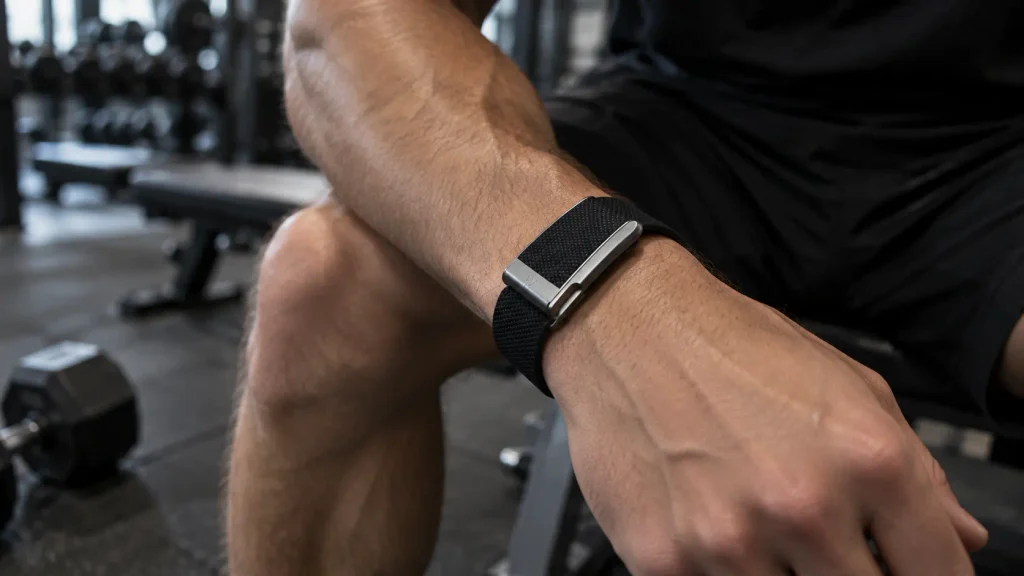
What you gain is a device built entirely around a single unified metric: strain, which factors in both strength and cardio sessions together rather than treating them as separate data streams. For hybrid athletes who care more about weekly training load than moment-to-moment stats, that trade-off can be worth it. For anyone who wants to glance at their wrist mid-set or mid-run, a screened option makes more sense.
What Metrics Actually Matter for Hybrid Training
Not every metric a tracker offers is equally useful. For fitness trackers for hybrid athletes specifically, a few metrics stand out above the rest.
| Metric | Why It Matters for Hybrid Training |
|---|---|
| Training load / strain | Combines strength and cardio fatigue into one number instead of tracking them separately |
| VO2max | Tracks aerobic progress, especially useful alongside structured Zone 2 work |
| Heart rate variability (HRV) | An early signal of under-recovery across both training types |
| Sleep stages | Affects recovery from both lifting and cardio equally |
| Set/rep logging | The metric most cardio-focused watches still handle poorly |
6 Mistakes People Make Choosing a Fitness Tracker
Most bad choices among fitness trackers for hybrid athletes come from optimizing for the wrong priority.
- Choosing based on brand loyalty alone. A running-first Garmin lineup and a strength-first Garmin lineup aren’t equally good at both jobs.
- Ignoring subscription costs. Whoop’s ongoing fee changes the long-term value equation compared to a one-time purchase.
- Overvaluing GPS accuracy for a mostly-gym-based routine. If your training is 70% strength, dual-band GPS precision matters far less than strength tracking depth.
- Assuming more expensive means more hybrid-relevant. Some premium running watches still treat strength training as an afterthought.
- Never actually using the strength-tracking features. Manually logging sets defeats the purpose — check how automated a watch’s rep detection really is before buying.
- Chasing every metric instead of the ones that change your training. Training load and HRV drive real decisions; most of the rest is noise.
FAQ
Do I need a screen on my fitness tracker?
Not necessarily. A screen helps for real-time pace and heart rate, but screenless options like Whoop can still track hybrid training effectively through their app-based recovery and strain metrics.
Which fitness tracker is best for tracking both strength and cardio?
The Garmin Forerunner 970 currently offers the most complete balance between the two, with elite cardio metrics alongside a genuinely useful strength training library.
Is Whoop worth the subscription for hybrid athletes?
It depends on priorities. If combined training load and recovery are what you care about most, the subscription can be worth it. If you want real-time pace or heart rate on your wrist, a screened watch is the better fit.
What’s the best budget option among fitness trackers for hybrid athletes?
The Garmin Vivoactive 6 offers the strongest mix of hybrid-relevant features — including built-in strength plans — at a meaningfully lower price than the flagship options.
Does the Apple Watch Ultra 3 work well for hybrid training?
Yes, particularly for iPhone users. It handles both strength and cardio reasonably well, though dedicated running-focused watches from Garmin and Coros still edge it out for pure endurance metrics.
Quick Action Plan
- Estimate your current training split — mostly strength, mostly cardio, or roughly even.
- If you’re roughly even, start with the Garmin Forerunner 970 for the most balanced tracking.
- If recovery and training load matter most to you, consider Whoop 5.0 and factor in the subscription cost.
- If you’re already in the Apple ecosystem, the Ultra 3 is a strong all-around option.
- On a budget, the Garmin Vivoactive 6 covers the essentials without the flagship price.
- Whatever you choose, check your device’s training load metric weekly rather than obsessing over daily numbers.
Bottom line: the best fitness trackers for hybrid athletes are the ones that respect both halves of your training, not just the half the brand originally built the device for. Browse our Gear & Equipment section for more picks as your training evolves.








Leave a Reply