






⚡ Quick Answer — Rucking for Hybrid Athletes
Rucking for hybrid athletes means walking with a loaded backpack or weighted vest as low-impact cardio that also loads your legs, hips, and back. Start with roughly 5–10% of your body weight, keep sessions short at first, and use it to add aerobic volume without the pounding of running — especially on days when your legs are still recovering from heavy lifting.
Weighted walking has moved from military training grounds into gyms, parks, and group classes. Weighted vest sales rose more than 50% in the 12 months to May 2025, and mainstream outlets were still covering the trend heavily through the summer of 2026. Most of that coverage treats it as a wellness fad rather than a training tool.
We went through guidance from the American College of Sports Medicine and the American Council on Exercise, along with what critics say the research still doesn’t show, to work out where rucking for hybrid athletes actually earns a place in a week that already includes lifting and cardio. Here is the practical version.
How to Start Rucking for Hybrid Athletes in 6 Simple Steps
Rucking for hybrid athletes comes down to six decisions, made in this order:
- Pick your carrier. A weighted vest for a snug, even load, or a backpack with padded straps and a waist belt for a hiking-style ruck.
- Set a light starting load. Around 5–10% of your body weight is the usual beginner range.
- Keep sessions short. Ten to twenty minutes is plenty for the first week or two.
- Walk at a conversational pace. The extra load raises effort, so you will usually need to slow down slightly to stay easy.
- Progress one variable at a time. Add time or add weight, never both in the same week.
- Slot it around your lifting. Use it on lower-stress days rather than stacking it on your hardest leg session.
The sections below explain the reasoning behind each step so you can adjust them to your own training week.
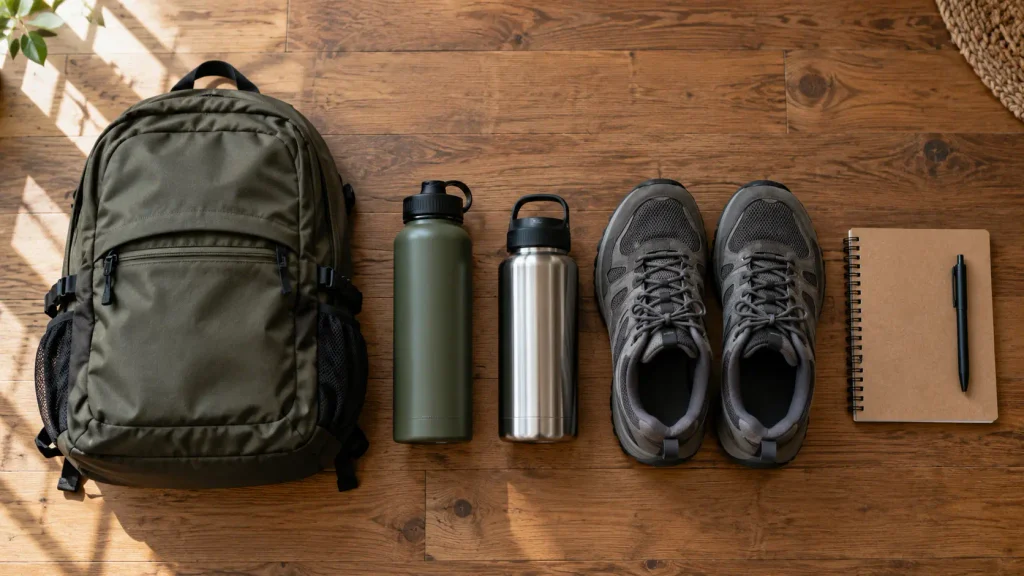
Why Rucking for Hybrid Athletes Makes Sense
The case for rucking for hybrid athletes is mostly about energy cost without impact. Walking with a load is still walking, so the stress on your joints is generally lower than running, yet the extra weight makes your body work harder. According to the American College of Sports Medicine’s guidance on weighted vests, walking at 2.5 mph in a vest loaded to about 15% of your body weight burns roughly 12% more energy than walking unloaded.
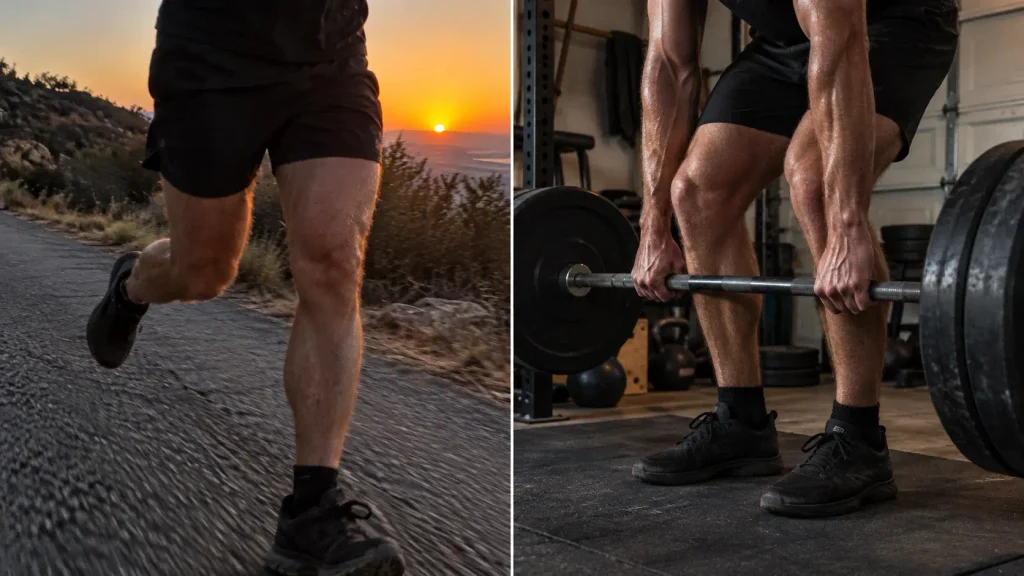
For a hybrid athlete, that matters for one simple reason: your recovery budget is shared. Running adds impact on top of the muscle damage from squats and deadlifts, while rucking for hybrid athletes gives you a way to keep aerobic volume up on days when a run would be a poor idea. That is the exact situation covered in our guide to running after leg day.
There is also the momentum behind it. Market research firm Circana reported that weighted vest sales rose more than 50% to $27 million in the 12 months ending May 2025, and gyms, clubs, and gear brands have built classes and communities around loaded walking. Popularity is not proof that something works, but it does mean gear, coaching, and training partners are easy to find. That lowers the barrier to trying rucking for hybrid athletes.
💡 Training Tip
Treat rucking as a swap, not an add-on. If you follow our 12-week hybrid training plan, use a ruck in place of one easy cardio session rather than adding it on top of a full week.
Weighted Vest vs. Backpack: Which Is Better for Rucking for Hybrid Athletes?
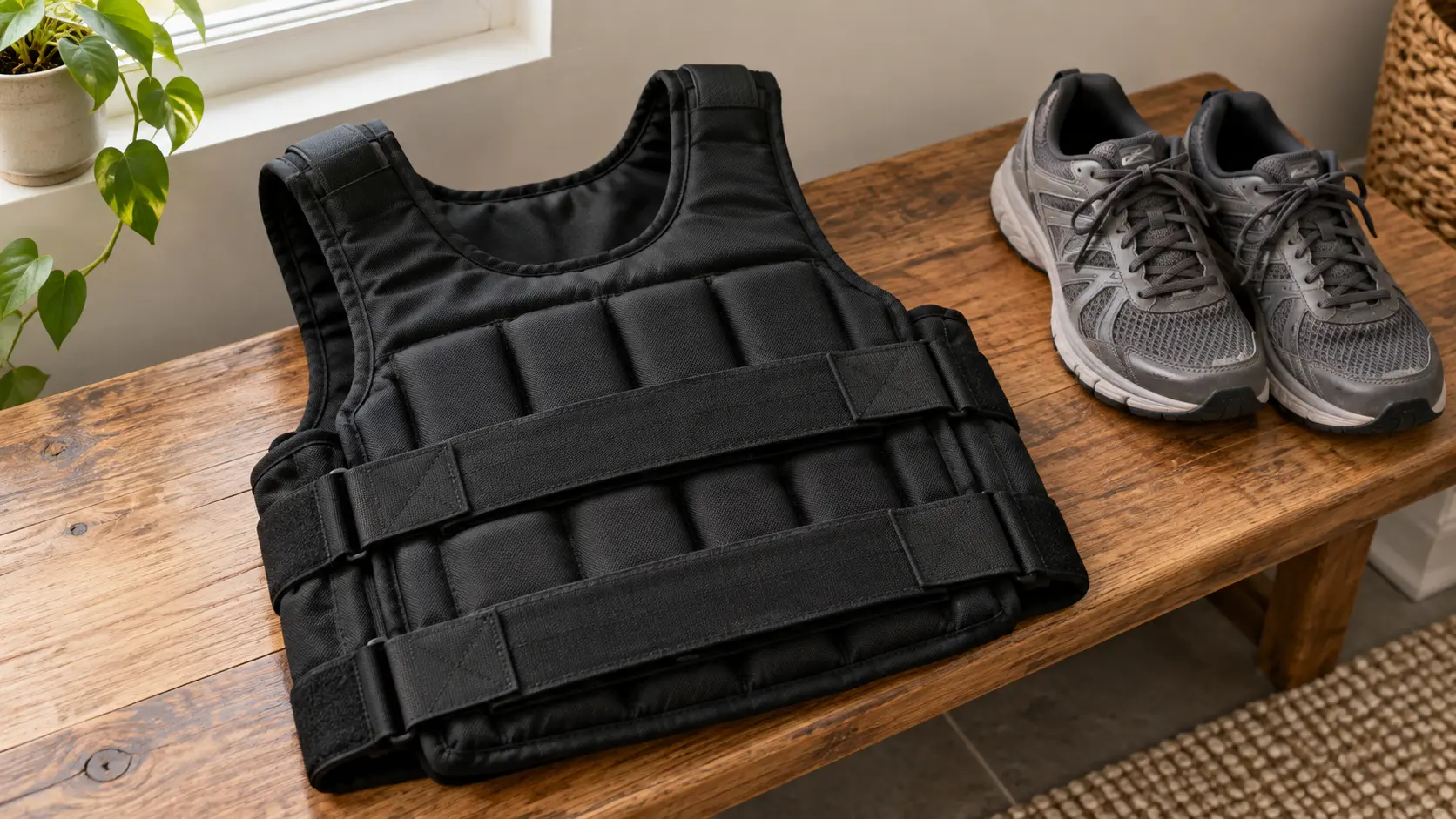
Both options put weight on your body, but they carry it differently. A backpack, the classic ruck, concentrates the load on your back and feels familiar to anyone who has hiked. A vest holds the weight snugly and evenly around your torso, which can help with posture and balance during more varied movement.
| Feature | Weighted Vest | Ruck Backpack |
|---|---|---|
| Where the load sits | Snug and even around the torso | Concentrated on the back |
| Best suited to | Walking, bodyweight work, gym use | Hiking and longer outdoor walks |
| How you add weight | Removable inserts | Plates, sandbags, or water bottles |
| What to check | Breathable padding and a snug fit | Padded straps and a waist belt |
If you go the backpack route, choose one with padded shoulder straps and a waist belt so some of the load shifts to your hips. You can fill it with purpose-made plates or sandbags, or simply use water bottles. One gallon of water weighs about 8 pounds, which makes it an easy way to measure a starter load.
If you are unsure, a backpack you already own is enough to begin. For rucking for hybrid athletes, the gear matters far less than the load and the progression.
How Heavy Should You Go? Starting Load for Rucking for Hybrid Athletes
The most repeated beginner advice is to start light. The American Council on Exercise suggests roughly 5% of your body weight, and other beginner guidance for vests puts the range at 5–10%. For an 80 kg (176 lb) athlete, that is about 4–8 kg (9–18 lb). Begin with 10–20 minutes and lengthen sessions gradually over a few weeks.
Here is a sensible four-week starter template. It is an example of progression, not a prescription, so adjust it to how your legs, back, and shoulders respond.
| Week | Load (% of body weight) | Session Length | Sessions |
|---|---|---|---|
| 1 | ~5% | 15 min | 2 |
| 2 | ~5% | 25 min | 2 |
| 3 | ~7% | 25 min | 2 |
| 4 | ~7% | 35 min | 2 |
Notice that each week changes only one thing: time in weeks 2 and 4, load in week 3. That is the practical core of rucking for hybrid athletes. Keep the load modest and let consistency do the work. Trainers quoted in mainstream coverage consistently describe good posture under load as tall and slightly forward, never slumped, so if your form breaks down, the weight is too heavy for now.
⚠️ Common Mistake
Adding weight and time in the same week. If your back, shoulders, or knees ache the next day, drop back to the previous load before pushing forward.
Where Rucking for Hybrid Athletes Fits in Your Week
Placement is what separates useful loaded walking from extra fatigue. Rucking for hybrid athletes works best when it replaces something rather than piling onto a full schedule.
- The day after heavy lower-body work. Easy, short, and low-impact, it is a friendlier option than running on sore legs.
- As an easy aerobic session. Slow down until you can hold a conversation and it can stand in for an easy cardio day. Our guide to Zone 2 training for hybrid athletes explains how to check the pace.
- Away from your hardest sessions. Keep it off the day before or after your biggest squat or deadlift session, and away from hard intervals.
- Outdoors when possible. Hills add effort without adding speed, which suits loaded walking well.
If you track your training with a watch, our guide to fitness trackers for hybrid athletes covers which devices handle both strength and cardio sessions. Keep in mind that during rucking for hybrid athletes, heart rate will typically run higher with a load at the same pace, so judge intensity by breathing rather than by pace alone.
What the Research Says About Rucking for Hybrid Athletes (and What It Doesn’t)
This is where the hype needs a reality check. The ACSM notes that more research is needed, but regular long-term weighted vest use may help prevent hip bone density loss in older adults. A physical therapist quoted by Axios points out that studies often compare ruckers with sedentary people rather than with people who already walk or lift. An Associated Press report in 2025 likewise noted a lack of robust research behind many of the claimed benefits.
What that means for rucking for hybrid athletes: you are not adding it because it has been proven to beat lifting or running. You are adding it because it is a low-impact, adjustable, easy-to-progress way to add loaded aerobic work, with the caveat that the evidence for the bigger claims is still thin. The same physical therapist warns that rucking is not an easy button, and that poor form and uneven weight distribution can cause posture problems and shallow breathing.
Who Should Be Careful With Rucking for Hybrid Athletes?
Weighted walking is not for everyone. Health-library guidance based on ACSM and ACE advice says people with chronic back, shoulder, or knee pain should steer clear, because the extra load can make those conditions worse. It also suggests skipping a vest during activities with a lot of bending, twisting, or inversion, and reporting has advised caution for older adults and anyone who is pregnant.
🚨 Important
This is general training information, not medical advice. If you have pain, an injury, or a health condition, check with a healthcare provider before adding load to your walking.
6 Mistakes People Make With Rucking for Hybrid Athletes
Most problems with rucking for hybrid athletes come from doing too much, too soon.
- Starting heavy. Beginner guidance consistently points to 5–10% of body weight, not a tactical-style load.
- Adding time and weight together. Change one variable per week so you can tell what your body is reacting to.
- Slouching under load. Tall, slightly forward posture protects your back and keeps your breathing open.
- Treating it as an easy button. It is gentle on the joints, but it is still training and it still adds fatigue.
- Stacking it on your heaviest leg day. Loaded walking on top of your hardest lower-body session defeats the point of using it as low-stress cardio.
- Using a poorly fitted vest or unbalanced pack. Uneven weight distribution is a common cause of posture problems, so fit and balance come before extra load.
FAQ
Is rucking good cardio?
Yes, rucking for hybrid athletes counts as aerobic exercise, and the added load raises the effort of walking. Intensity still stays modest unless you add hills or heavier loads, so it works best as easy-to-moderate cardio rather than a replacement for hard intervals.
Is rucking for hybrid athletes better than running?
They are different tools. Running is higher impact and usually higher intensity, while rucking suits days when you want aerobic work with less pounding. It does not fully replace the intensity of running intervals.
How much weight should I use for rucking for hybrid athletes?
Start around 5–10% of your body weight, using the lower end if you are new to it, and increase gradually once your posture and breathing stay comfortable.
Is rucking for hybrid athletes okay the day after leg day?
Usually yes, with a light load, an easy pace, and a short session. Skip it or switch to something else if soreness changes how you walk.
Should I buy a weighted vest or a backpack for rucking for hybrid athletes?
Either works. A vest holds the load evenly around the torso, while a backpack suits hiking-style walks. A pack you already own is enough to start.
How often should I do rucking for hybrid athletes?
Two sessions per week is a reasonable starting point for most hybrid athletes, ideally replacing an existing easy cardio session rather than adding to it.
Quick Action Plan: Your First Two Weeks
Use this sequence to start rucking for hybrid athletes without overloading your week:
- Start with a backpack you already own, or borrow a vest, before buying anything.
- Load it to about 5% of your body weight. Water bottles work well.
- In week 1, do two easy 15-minute walks, one of them the day after your heaviest lower-body session.
- Check your posture and pace: tall, slightly forward, and able to hold a conversation.
- In week 2, extend both walks to about 25 minutes at the same load.
- If your back, shoulders, or knees complain, reduce the load before increasing anything.
Bottom line: rucking for hybrid athletes is a simple, low-impact way to add loaded aerobic work, as long as you keep the load modest, progress slowly, and let it replace something rather than pile on top of your week. For more gear and setup ideas, browse our Gear & Equipment section.






Leave a Reply