







⚡ Quick Answer — Minimum Effective Dose for Strength Training
The minimum effective dose for strength training is roughly 1 set per exercise, taken close to failure, 2–3 times per week per movement pattern. Research on trained lifters and recreational runners both point to the same conclusion: meaningful strength gains don’t require the high-volume programs most people assume are necessary, which makes strength work far easier to fit around serious cardio training.
Most hybrid athletes either skip strength training because they think it needs to be time-consuming, or they cram in more sets than their schedule can actually recover from. Both mistakes come from the same wrong assumption: that more volume always means more strength.
We went through the research on minimum effective training volume, including a meta-analysis of resistance-trained lifters and a controlled trial on recreational runners. Here’s what the minimum effective dose for strength training actually looks like, and why it matters even more once cardio is competing for your recovery.
What Is the Minimum Effective Dose for Strength Training? (Featured Snippet)
The minimum effective dose for strength training is the smallest amount of training volume — sets, reps, and frequency — that still produces a meaningful increase in strength. Research on trained lifters suggests as little as one set per exercise, performed close to failure two to three times per week, is enough to increase 1-rep max strength over 8–12 weeks, though it produces gains at a slower rate than higher-volume programs.
This isn’t a shortcut that sacrifices results — it’s a different point on the same dose-response curve, and for hybrid athletes it’s often the more sustainable one.
Why This Matters More for Hybrid Athletes Than Anyone Else
A dedicated powerlifter can afford to chase maximum training volume, because lifting is their only significant training stress. A hybrid athlete is spending real recovery capacity on cardio too, which changes the math entirely.
Understanding the minimum effective dose for strength training gives hybrid athletes something powerlifters don’t need as urgently: permission to stop treating “more sets” as automatically better. If three sets of squats gets you 90% of the strength benefit of six sets, the recovery you save can go directly toward the running, cycling, or rowing volume your other goals depend on.
💡 Training Tip
The strength blocks in our 12-week hybrid training plan already sit close to minimum effective dose territory during the accumulation phase. This article explains the research behind why that’s intentional, not a compromise.
What the Research Actually Found
The Androulakis-Korakakis Meta-Analysis
The most direct evidence on the minimum effective dose for strength training comes from a systematic review by Androulakis-Korakakis and colleagues, published in Frontiers in Sports and Active Living. Reviewing multiple training studies in resistance-trained men, the 2021 review on minimum effective training dose for 1RM strength found that performing a single set of 6–12 reps at 70–85% of 1RM, taken close to failure, 2–3 times per week, produced significant — if modest — increases in squat and bench press strength over 8–12 weeks.
Critically, the low-volume group in one of the underlying studies did roughly one-eighth the total training volume of a higher-volume comparison group, yet still made meaningful strength gains relative to how little they were doing. That disproportionate return is the entire argument for taking the minimum effective dose for strength training seriously.
The Runners Study: Less Volume, Real Results
The second key piece of evidence comes from a controlled trial specifically on recreational female runners. Comparing groups doing 30 minutes or 60 minutes of strength training per week alongside their running, the study published in a sports science journal found that both low-volume strength groups significantly improved maximal running performance, with no meaningful difference between the 30-minute and 60-minute groups.
That result is directly relevant to anyone applying the minimum effective dose for strength training to a hybrid schedule: doubling the time investment from 30 to 60 minutes per week didn’t produce proportionally better running performance. The extra 30 minutes bought little beyond what the smaller dose already delivered.
How Many Sets Do You Actually Need?
Translating the research into a practical number depends on your goal. The minimum effective dose for strength training differs depending on whether you’re trying to maintain strength, gain it slowly, or gain it at a normal rate.
| Goal | Sets per Movement/Week | Frequency | Intensity |
|---|---|---|---|
| Maintain current strength | 2–3 | 1–2x/week | Moderate to heavy |
| Minimum effective dose for gains | 3–6 | 2–3x/week | Close to failure, 70–85% 1RM |
| Standard hypertrophy/strength range | 10+ | 2–3x/week | Varied, moderate to heavy |
Note what’s missing from that table: a scenario where you need 15–20+ sets per movement per week just to hold onto the strength you already have. That volume is for maximizing gains, not for keeping them — a distinction most hybrid athletes never hear.
Maintenance Volume vs. Growth Volume
This is the single most useful distinction the minimum effective dose research offers hybrid athletes. Building new strength and maintaining existing strength require very different amounts of work.
General estimates suggest maintenance volume sits at roughly one-third of the volume needed to build strength or muscle in the first place. In practice, that means during a heavy cardio block — marathon training, an event build-up, a period where running volume needs to peak — you can often drop to 2–3 sets per major movement per week and hold your strength largely intact, freeing up recovery capacity for the cardio side.
⚠️ Common Mistake
Treating every training block like a growth phase. Applying growth-level volume during a period when your goal is simply to maintain strength wastes recovery capacity your cardio training needs.
Which Exercises Give You the Most Per Set
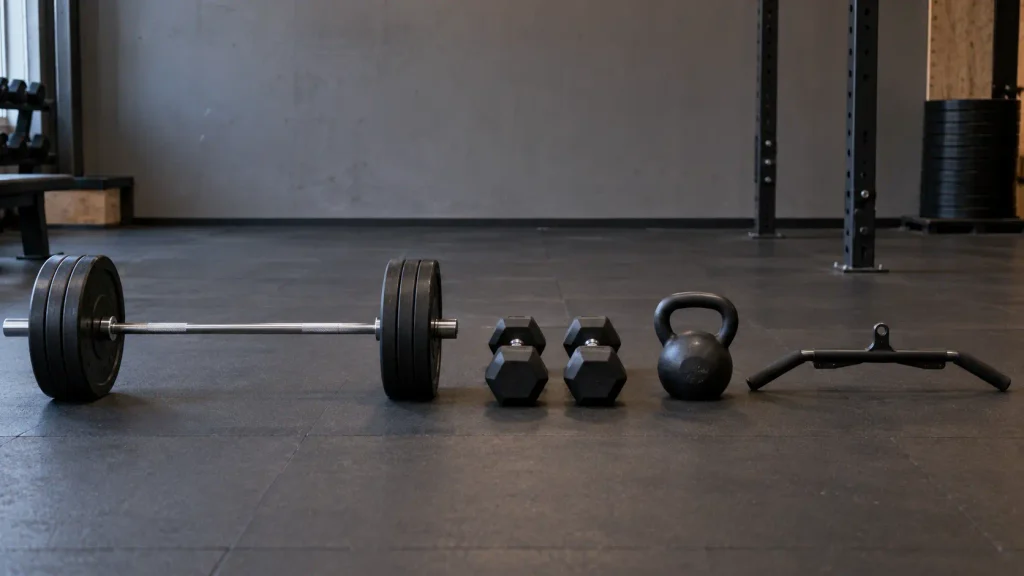
The minimum effective dose for strength training works best when each set is doing real work. Compound, multi-joint movements — squats, deadlifts, presses, rows, and their variations — train more muscle mass per set than isolation exercises, which matters enormously when your total set count is deliberately low.
A minimum effective dose program built around three or four compound lifts, one set each, taken close to failure, covers far more ground than the same number of sets spread across isolation exercises. Accessory work still has a place, but it’s the first thing to cut when time or recovery is tight — not the compound lifts.
Fitting Minimum Effective Dose Into a Hybrid Training Week
Here’s where the research becomes genuinely practical. A minimum effective dose approach to strength training can realistically fit into 30–45 minutes, 2–3 times per week.
- Pick 3–4 compound movements that cover squatting, hinging, pushing, and pulling patterns.
- One to two working sets per movement, taken to or near failure, is enough to sit within the minimum effective dose range.
- Two to three sessions per week spreads that volume without requiring long individual workouts.
- Keep it separate from your hardest cardio days, following the same non-consecutive-day principle used throughout hybrid training.
This is a very different picture from the hour-plus lifting sessions many hybrid athletes assume they need, and it’s exactly why the minimum effective dose for strength training matters so much once cardio volume climbs.
When You Should Do More Than the Minimum
The minimum effective dose isn’t a ceiling — it’s a floor. There are good reasons to train above it.
If strength or muscle gain is your primary goal this training block, more volume (roughly 10+ sets per movement per week) will generally produce faster, larger gains than the minimum dose alone.
If you have the recovery capacity to spare — a lower cardio volume phase, more sleep, less life stress — additional sets aren’t wasted, they’re simply optional rather than required.
If a specific weakness needs targeted work, extra volume on that particular movement pattern makes sense even while everything else stays at minimum effective dose levels.
🚨 Important
Training close to failure carries real technical demands, especially on compound lifts. If you’re new to training, build technique with lighter loads and more submaximal reps before pushing sets close to failure. This is general training information, not individualized coaching.
6 Mistakes People Make With Minimum Effective Dose Training
The concept is simple, but a few errors consistently undermine it in practice.
- Confusing “minimum” with “easy.” The sets need to be taken close to failure — a light, comfortable set doesn’t count toward the minimum effective dose for strength training.
- Applying maintenance volume during a growth-focused block. If building strength is the actual goal right now, minimum dose training will underdeliver.
- Skipping compound lifts in favor of isolation work. Isolation exercises don’t give you the same return per set that compound movements do.
- Chasing perfect exercise selection instead of consistency. The research supports simple, well-executed basics far more than exotic exercise variations.
- Ignoring frequency entirely. One heroic set once every two weeks isn’t the same as the same set performed two to three times weekly.
- Never progressing the load. Minimum effective dose still requires adding weight or reps over time — it’s a volume strategy, not a permission to stay static.
FAQ
Can I really get stronger with just one set per exercise?
Research suggests yes, particularly for maintaining or slowly building strength. One set taken close to failure, done consistently 2–3 times per week, produced meaningful gains in trained lifters across multiple studies.
Is minimum effective dose training good for beginners?
The research behind minimum effective dose for strength training was largely conducted on people with prior training experience. Beginners often respond well to slightly higher volumes while they’re still learning movement patterns and technique.
How much strength training do runners actually need?
A controlled study on recreational runners found that just 30 minutes of strength training per week improved running performance as much as 60 minutes did, suggesting a genuinely low weekly time investment is enough.
Should I use minimum effective dose training all year?
Not necessarily. It works well during high cardio volume phases or maintenance periods. If building new strength is the current priority, higher training volumes will generally get you there faster.
What counts as “close to failure” for minimum effective dose training?
Most of the underlying research uses sets performed with high effort — typically leaving 0–2 reps in reserve — rather than stopping well short of fatigue.
Quick Action Plan
- Choose 3–4 compound movements covering squat, hinge, push, and pull patterns.
- Perform 1–2 working sets per movement, taken close to failure, at 70–85% of your estimated 1RM.
- Train each movement 2–3 times per week, on days separate from your hardest cardio sessions.
- Add small amounts of load or reps over time — the minimum dose still needs progression.
- During heavy cardio blocks, drop toward the lower end of this range to prioritize recovery for running or cycling.
- Reassess after 8–12 weeks by tracking your key lifts, not by how much time you spent in the gym.
Bottom line: the minimum effective dose for strength training proves that hybrid athletes don’t have to choose between meaningful strength gains and enough recovery for cardio. For the full weekly structure this fits into, see our Strength & Conditioning section.













Leave a Reply