







⚡ Quick Answer — Running After Leg Day
Running after leg day is fine for most hybrid athletes as long as the run is easy and the timing is right. A short, conversational-pace run 24–48 hours after heavy leg training can ease stiffness, while hard intervals or long runs on heavily sore legs tend to feel worse, cost more energy, and add unnecessary recovery debt.
Every hybrid athlete hits this moment: the day after heavy squats, the calendar says run, and your quads say absolutely not. Skip it and you feel like you’re falling behind. Push through it and you wonder if you’re doing damage.
We looked at the research on muscle soreness and running economy, alongside how experienced hybrid athletes actually structure their weeks. Here’s what running after leg day actually does to your body, when it helps, and when it’s genuinely a bad idea.
Running After Leg Day: The Short Answer
Running after leg day works well when you follow a simple sequence:
- Check the timing: within 12 hours or at peak soreness (usually 24–72 hours), keep it very easy.
- Choose easy pace only: conversational effort, the kind described as Zone 2.
- Keep it short: 20–40 minutes is plenty on sore legs.
- Pick forgiving terrain: flat routes, and avoid long downhills that load sore quads.
- Save intervals for later: schedule hard running sessions at least 48 hours after heavy leg work.
Most problems with running after leg day come from ignoring the second and fifth steps — not from running itself.
What Actually Happens to Your Legs After a Heavy Session
Heavy leg training, especially movements with a strong lowering phase like squats, lunges, and Romanian deadlifts, causes small-scale muscle damage. That damage triggers a local inflammatory response, and the result is delayed onset muscle soreness, or DOMS.
DOMS typically begins 12–24 hours after training and peaks somewhere between 24 and 72 hours. During that window, your muscles don’t just feel sore — they can produce slightly less force, absorb impact less efficiently, and fire in a less coordinated way. This is why running after leg day can feel almost fine the same evening and surprisingly clunky two days later.
Soreness itself isn’t a sign of a good or bad workout. It’s mostly a sign of an unfamiliar stimulus — which matters for what comes later in this article.
What the Research Says About Running on Sore Legs
The evidence here is genuinely mixed, which is useful to know before you trust anyone who gives you a hard rule.

A study by Braun and Dutto on well-trained runners and triathletes measured running economy before and 48 hours after a 30-minute downhill run designed to cause muscle soreness. Soreness from that session was associated with reduced running economy — meaning running at the same pace cost more energy. Other research, however, found that heavy eccentric quadriceps work didn’t meaningfully affect running economy 48 hours later, though athletes who rested in between tended to run slightly more economically than those who exercised at the 24-hour mark.
The practical takeaway for running after leg day: sore legs may make running a bit less efficient, the effect varies between people and between types of muscle damage, and nothing in the research suggests an easy run on sore legs is harmful. It just won’t be your best running.
💡 Training Tip
If running after leg day always leaves you wrecked, the fix is usually intensity, not avoidance. Our guide to Zone 2 training for hybrid athletes explains how easy “easy” really needs to be.
Timing: The 0–72 Hour Window
Timing is the biggest single variable in running after leg day. The same run can feel restorative or miserable depending on when it happens.
| Time After Leg Day | How Legs Typically Feel | Recommended Running |
|---|---|---|
| 0–6 hours | Tired, not yet sore | Easy run OK if planned; keep it short |
| 12–24 hours | Soreness starting | Easy recovery run, 20–40 min |
| 24–48 hours | Often peak soreness | Easy only; skip if movement is altered |
| 48–72 hours | Soreness fading | Moderate runs usually fine |
| 72+ hours | Mostly recovered | Hard sessions and intervals |
These are general patterns, not fixed rules. Newer lifters or anyone returning after a break often feel soreness longer and more intensely, while experienced hybrid athletes who train legs regularly may be ready for harder running closer to the 48-hour mark.
Easy Runs vs. Hard Runs After Leg Day
The intensity of your run matters far more than whether you run at all.
Why Easy Running Can Help
Easy running after leg day increases blood flow to working muscles and keeps you moving through the stiffness that builds when you stay sedentary. Many athletes find their legs feel noticeably looser after 10–15 minutes of easy jogging than they did at the start.
It also keeps your weekly aerobic volume on track. Skipping every run that falls within 48 hours of leg day can quietly cut your running volume in half, which matters if endurance is one of your goals.
Why Intervals Are a Bad Idea
Hard intervals are where running after leg day goes wrong. Sore, fatigued muscles absorb impact less efficiently and fire less smoothly, and high-speed running amplifies both problems. You’ll likely hit slower splits for the same effort, generate more fatigue, and push back your recovery for the next leg session.
Long downhill runs deserve special caution too. Downhill running itself loads the quads eccentrically — the same type of stress that caused the soreness in the first place — so stacking it on top of leg day compounds the damage rather than easing it.
⚠️ Common Mistake
Keeping your scheduled interval session the day after heavy squats because “the plan says so.” Swap it with an easy run later in the week — the plan’s intent matters more than its exact order.
Soreness vs. Injury: Knowing the Difference
Normal soreness and actual injury can both show up as pain while running after leg day, but they behave very differently.
| Signal | Normal DOMS | Possible Injury |
|---|---|---|
| Location | Spread across the whole muscle | Sharp, localized to one spot |
| Both legs? | Usually symmetrical | Often one side only |
| During the run | Eases after warming up | Gets worse as you keep going |
| Type of pain | Dull ache, stiffness | Sharp, stabbing, or pinpoint |
| Joints | Muscles only | Pain in knee, hip, or ankle joints |
| Timeline | Fades within 3–5 days | Persists or worsens |
The single most useful test: if pain gets better after 10 minutes of easy running, it’s almost certainly soreness. If it gets worse, stop.
🚨 Important
Stop running if you feel sharp or localized pain, joint pain, or pain that worsens as you continue. Severe muscle pain combined with swelling, extreme weakness, or dark-colored urine after intense training needs prompt medical attention. This is general information, not medical advice.
The Repeated Bout Effect: Why It Gets Easier
Here’s the good news: running after leg day gets noticeably easier with consistency. After a first bout of unfamiliar eccentric exercise, your muscles adapt so that the same workout causes significantly less soreness and damage the next time — a well-documented phenomenon called the repeated bout effect.
This is why the worst DOMS usually shows up after the first leg session of a new program, after a break, or after adding new exercises. Hybrid athletes who train legs consistently every week often find that by week three or four of a program, running the day after leg day barely registers. If every leg day leaves you crippled for three days, inconsistency is often the real cause.
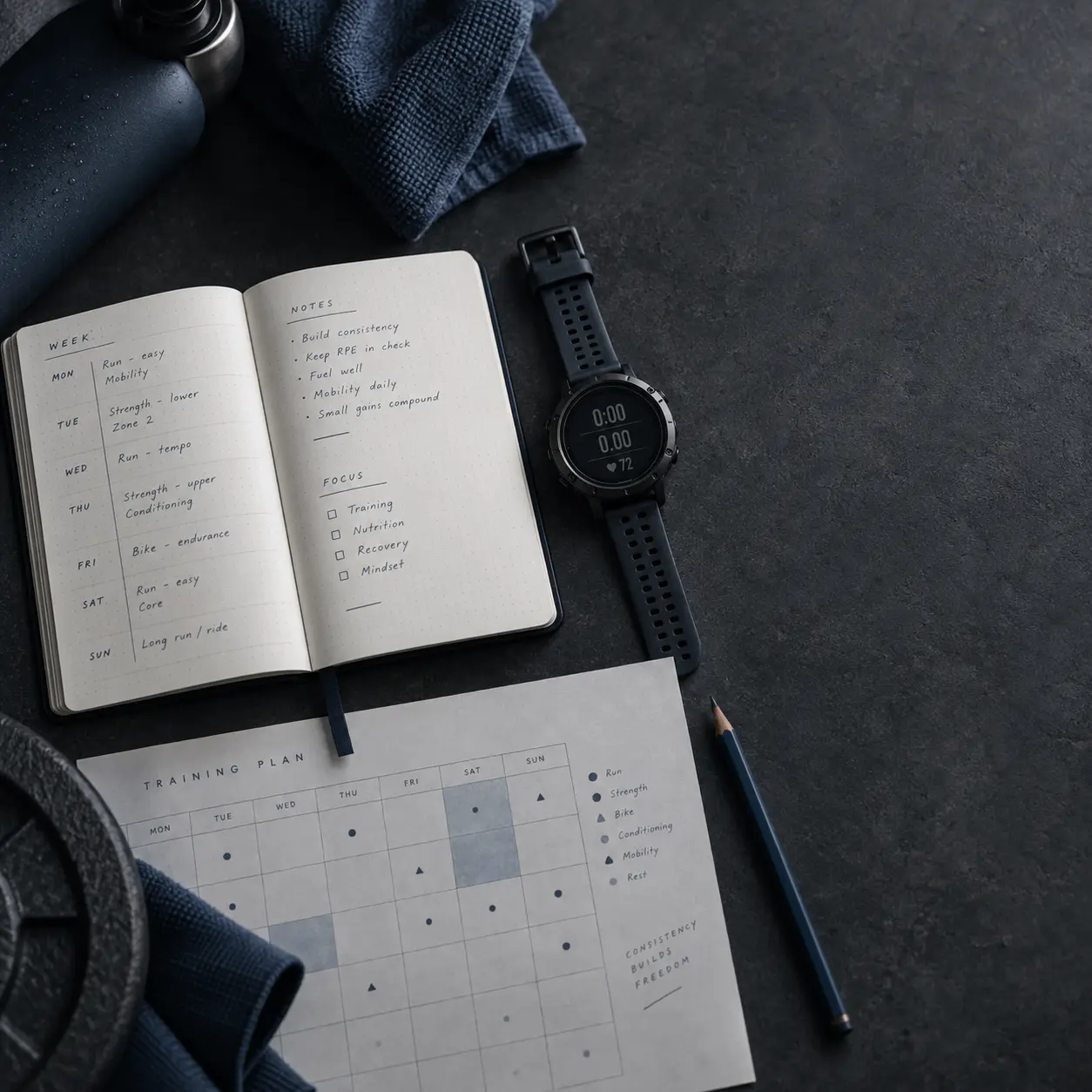
How to Schedule Leg Day and Running in the Same Week
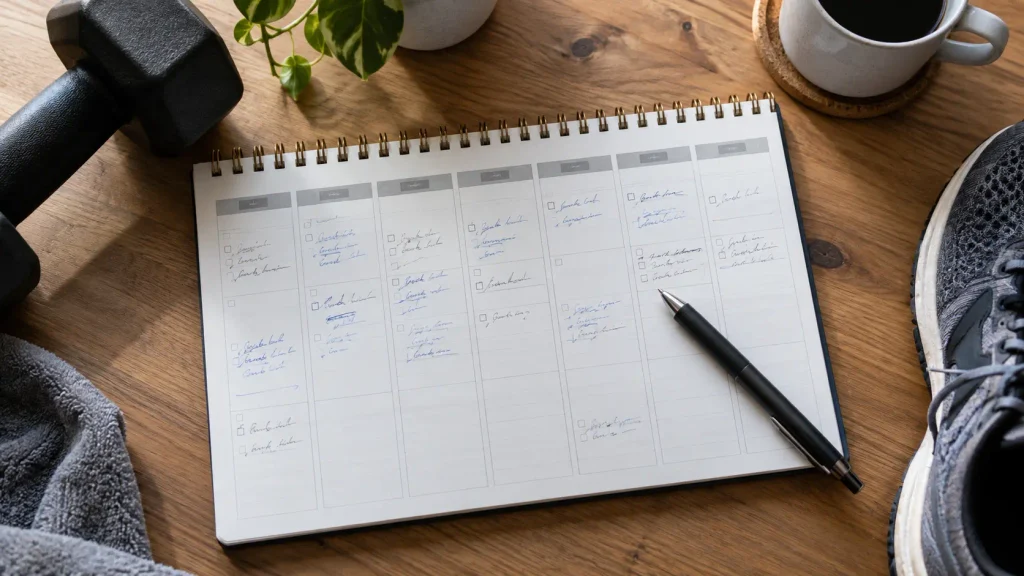
The best way to handle running after leg day is to plan it, rather than reacting to how sore you feel each morning. A few scheduling principles hold up for most hybrid athletes:
- Put easy runs the day after leg day. They fit the recovery window and keep aerobic volume up.
- Put your hardest run at least 48–72 hours after your heaviest leg session. This protects the quality of both.
- Avoid the reverse too. A hard run the day before heavy squats compromises your lifting just as much.
- Consider low-impact cardio at peak soreness. Cycling or rowing loads sore legs less than running if you still want aerobic work.
Our 12-week hybrid training plan uses exactly this structure, with heavy lower-body work early in the week and hard cardio four days later. For the bigger picture on sleep, deloads, and fatigue management, see our guide to recovery for hybrid athletes.
6 Mistakes That Make Running After Leg Day Worse
Most bad experiences with running after leg day come from a handful of predictable errors.
- Running hard on peak-soreness days. Intensity, not running itself, is what turns a recovery run into a setback.
- Choosing hilly or downhill routes. Downhill running adds eccentric quad stress on top of the damage you already have.
- Skipping the warm-up. Sore muscles need 5–10 minutes of very easy movement before they loosen up.
- Training legs inconsistently. Irregular leg days prevent the repeated bout effect and guarantee severe soreness every time.
- Ignoring altered running form. If soreness changes how you run, the risk of overloading something else rises — cut the run short or switch to cycling.
- Treating every ache as a reason to skip. Normal DOMS isn’t a stop sign; running after leg day at an easy pace is usually the better choice than full rest.
FAQ
Is it bad to run the day after leg day?
No, as long as the run is easy. A short, conversational-pace run the day after leg day is fine for most people and often reduces stiffness.
Is running after leg day bad for muscle growth?
Easy running after leg day is unlikely to meaningfully affect muscle growth. High volumes of hard running close to leg sessions are more likely to interfere with strength and muscle gains.
Should I run or rest when my legs are very sore?
If you can run with normal form, an easy run is usually better than complete rest. If soreness changes how you move, choose low-impact options like cycling, walking, or full rest.
How long should I wait to do intervals after leg day?
For most hybrid athletes, 48–72 hours after a heavy leg session is a sensible minimum before hard intervals or race-pace work.
Can I run on the same day as leg day?
Yes. Many athletes run easily several hours after lifting, before soreness sets in. Keep the run easy and separate the two sessions by at least a few hours if possible.
Quick Action Plan
Use this sequence to handle running after leg day starting this week:
- Move your hardest running session to at least 48 hours after your heaviest leg day.
- Schedule an easy 20–40 minute run for the day after leg day.
- Choose a flat route and warm up with 5–10 minutes of very easy jogging or walking.
- Use the 10-minute test: if soreness eases, continue easy; if pain sharpens, stop.
- Swap to cycling or rowing on days when soreness changes your running form.
- Train legs consistently every week so the repeated bout effect reduces soreness over time.
Bottom line: running after leg day isn’t the problem — running hard after leg day is. Keep it easy, time your hard sessions well, and let consistency do the rest. For more on managing fatigue across combined training, browse our Recovery & Injury Prevention section.












Leave a Reply