







⚡ Quick Answer — Training When Sick
Training when sick is usually acceptable only if you have no fever and your symptoms stay above the neck — a runny nose, congestion, sneezing, or a minor sore throat. In that case, cut the length and intensity and swap hard sessions for easy ones. With a fever, chills, body aches, chest congestion, or a cough, skip training and rest until you feel well.
Every hybrid athlete has faced the same morning: the plan says heavy squats or intervals, and your nose is running. Skip the session and you feel like you are losing ground. Push through and you wonder whether you are making things worse.
We went through guidance from the American Lung Association, comments from the American College of Sports Medicine’s chief medical officer, and university and hospital health resources to build a decision framework for training when sick that fits a week of lifting and cardio. One honest note first: these sources describe practical rules of thumb, not a protocol tested in trials, so the goal here is sensible judgment rather than false precision.
Training When Sick: A 5-Step Decision Process
Use this sequence any time a cold or illness collides with your training week:
- Check for a fever first. Fever, chills, or body aches mean rest, whatever the plan says.
- Do the neck check. Symptoms only above the neck allow light to moderate training; symptoms below the neck do not.
- Cut the session down. Reduce length, intensity, and load compared with a normal day.
- Swap hard for easy. Replace intervals or heavy lifting with an easy walk, an easy ride, or a lighter session.
- Return gradually. Rebuild volume over several sessions instead of jumping back to full training.
The sections below explain each step, and how training when sick differs for the lifting and cardio halves of a hybrid week.
Why Training When Sick Is Harder for Hybrid Athletes
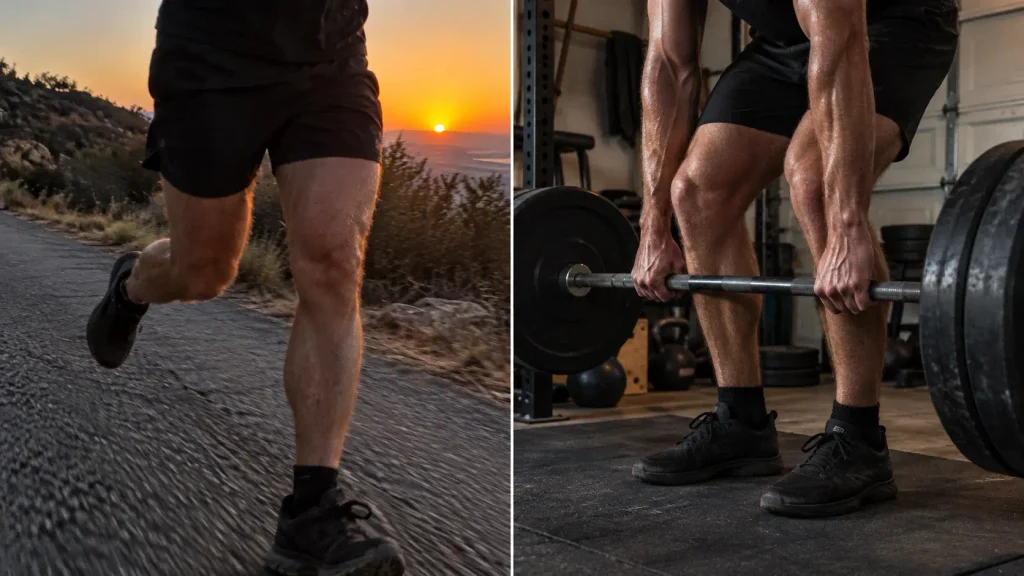
A single-sport athlete makes one decision when illness hits: train or don’t. A hybrid athlete makes two, because lifting and cardio carry very different costs. Heavy lifting creates muscle damage that needs recovery, while easy cardio is cheap on recovery, which is why it works so well as a low-stress option.
That difference is what makes training when sick manageable in a hybrid week. You rarely have to choose between everything and nothing. You can drop the session that costs the most, keep a small version of the one that costs the least, and stay connected to your routine without adding real stress to a body that is already busy.
The Neck Check for Training When Sick
The neck check is a rule of thumb widely used by health organizations for training when sick. The American Lung Association notes that mild to moderate physical activity is usually fine with a common cold, meaning a runny nose, nasal congestion, sneezing, or a minor sore throat, and suggests reducing the intensity or length of exercise, for example walking instead of running.
Dr. William Roberts, chief medical officer of the American College of Sports Medicine, described his own approach to the neck check in comments to Fox News. He said that with a fever or symptoms in the neck or below, you should not work out until you feel well or have been cleared by a physician, while symptoms above the neck may allow exercise at a lower intensity if it does not make you feel worse.
| Above the Neck (Light Training May Be OK) | Below the Neck or Systemic (Rest) |
|---|---|
| Runny nose | Chest congestion |
| Nasal congestion | Cough |
| Sneezing | Fever or chills |
| Minor sore throat | Body aches |
| Mild headache | Upset stomach |
Note the gray area: sources disagree slightly about sore throats. The American Lung Association counts a minor sore throat as a common cold symptom, while Dr. Roberts lists a sore throat among symptoms in the neck or below. The safe reading for training when sick is simple: a mild sore throat on its own is usually treated as above the neck, but a sore throat with fever, swollen glands, or general fatigue is not.
💡 Training Tip
If you follow our 12-week hybrid training plan, treat a sick week as a repeated week rather than a skipped one: repeat the week you missed once you are well instead of jumping ahead.
What Counts as Training When Sick With Above-the-Neck Symptoms
Being allowed to train does not mean training as planned. The consistent advice across the sources is to scale everything back. A Colorado State University health resource suggests not going as long or as hard as on a normal day, for example lifting lighter weight for fewer sets and reps than usual.
For a hybrid athlete, that translates into two concrete changes for training when sick, one for each half of your week.
Lifting When Sick
Keep the movement patterns but drop the load and the volume. A short session with lighter weights, fewer sets, and longer rests keeps the habit alive without asking much of a body that is already busy fighting an infection. Strength is easier to keep than to build, as covered in our guide to the minimum effective dose for strength training, so a scaled-down session costs you very little.
Cardio When Sick
Replace intervals, tempo runs, and long efforts with something easy. Walking, an easy bike ride, or light movement all count as training when sick, and the American Lung Association explicitly suggests walking instead of running. If you use our guide to Zone 2 training for hybrid athletes, apply its talk test: if you cannot speak in full sentences comfortably, slow down further.
Your Sick-Day Cheat Sheet for Training When Sick
This table turns the guidance into decisions for a typical hybrid week. The suggested durations are illustrative, not from a study, so adjust them to how you feel on the day.
| What You Have | Session Planned | What to Do Instead |
|---|---|---|
| Runny nose only | Hard intervals | Easy walk or easy ride, roughly 20–40 minutes |
| Runny nose only | Heavy lifting | Lighter loads, fewer sets, longer rests |
| Mild sore throat, no fever | Long run | Shorter, easy effort, or a walk |
| Chest congestion or cough | Any session | Rest |
| Fever, chills, or body aches | Any session | Rest, fluids, and sleep |
| Chest pain or trouble breathing | Any session | Stop and seek medical advice |
⚠️ Common Mistake
Keeping the planned hard session because “it’s only a cold.” Training when sick works when the session shrinks. If you cannot make it easier, skip it.
When Training When Sick Is a Bad Idea
Some situations remove the choice. According to health-library guidance summarizing American Heart Association and American Lung Association advice, you should never exercise with a fever, and with symptoms below the neck the best activities are rest and drinking plenty of fluids. It also recommends giving your body at least a day or two to recover before beginning exercise again.
The American Lung Association adds that anyone with an underlying condition such as asthma, COPD, or heart disease should check with a doctor first, because exercise may worsen an existing problem. Difficulty breathing is another reason to stop, as Dr. Roberts noted.
🚨 Important
This is general training information, not medical advice. If you have chest pain, trouble breathing, a fever, or symptoms that worsen, stop training and contact a doctor. If you test positive for COVID-19 or another infectious illness, follow current medical and public health guidance on isolation and return to activity.
How to Return After Training When Sick
The return matters as much as the decision to rest. The Colorado State resource advises starting your return gradually and using your body as your guide, and notes that a few days off should not dramatically change performance. That is reassuring for anyone worried about losing fitness during a short illness.
Here is a sensible return template. It is our own suggestion built on that guidance, not a protocol from a study, so shorten or extend the stages as needed.
| Stage | Condition to Move On | What to Train |
|---|---|---|
| 1. First sessions back | Fever gone, symptoms clearly improving | Easy cardio and lighter lifting at about half your usual volume |
| 2. Rebuilding | Stage 1 felt easy the next day | Normal loads with fewer sets, moderate cardio |
| 3. Full training | Stage 2 felt normal | Resume the plan, with hard intervals last |
Do not try to “catch up” on missed sessions. Stacking two missed days into one asks your body to absorb more stress right after an illness, which is the opposite of what the return is supposed to achieve. Sleep matters most during this window, so our guide to recovery for hybrid athletes is worth a second read.
Hydration, Rest, and Training When Sick
Hydration is the supportive habit the American Lung Association stresses most. Its spokesperson notes that many people feel better after a workout with a cold, but stresses that you should be well hydrated, because dehydration could make symptoms intensify during exercise.
Training when sick also carries a responsibility to other people. The hospital health library advises doing workouts at home if you have a head cold, because cold and flu viruses spread quickly. That means skipping the gym floor, the group class, and the training partner until you are no longer contagious.

6 Mistakes People Make When Training When Sick
Most of the trouble with training when sick comes from a few predictable choices.
- Ignoring a fever. The sources we reviewed treat fever as a hard stop, because exercise raises core temperature further.
- Assuming any sore throat is above the neck. A sore throat with fever, glands, or fatigue belongs in the rest category.
- Keeping the full session because the plan says so. Training when sick works only when you scale it back.
- Returning at full volume on the first good day. Feeling better is not the same as being ready for intervals or heavy lifting.
- Training in a crowded gym while contagious. Cold and flu viruses spread quickly between people.
- Skipping the doctor when you have asthma or a heart condition. The American Lung Association advises checking first.
FAQ
Is training when sick okay with a cold?
Often yes, if you have no fever and your symptoms stay above the neck. Reduce the length and intensity, choose easier options such as walking, and stop if you feel worse.
Should I lift or do cardio when training when sick?
Either can work at reduced intensity, provided symptoms are above the neck and there is no fever. Lighter lifting and easy cardio are both reasonable, and neither is suitable with a fever.
How long should I wait after a fever before training when sick?
The sources we reviewed give no fixed number of hours. They say never to exercise with a fever and to return gradually to milder workouts once it is gone. If you are unsure, ask a doctor.
Will I lose fitness or strength if I skip training when sick?
A few days off should not dramatically change performance, according to Colorado State University’s health resource. A short break is a small cost compared with turning a mild illness into a longer one.
Is training when sick safe with flu or COVID-19?
Flu-like symptoms such as fever, aches, and cough mean rest. If you test positive for COVID-19, follow current medical and public health guidance on isolation and returning to activity.
Should I go to the gym when training when sick?
It is better to train at home. Cold and flu viruses spread quickly, so avoid the gym floor, classes, and shared equipment while you are contagious.
Quick Action Plan: Your Next Sick Day
Use this sequence the next time training when sick comes up:
- Take your temperature if you feel unwell, and rest if you have a fever, chills, or body aches.
- Run the neck check: only above-the-neck symptoms allow light training.
- Cut the planned session down in length, intensity, and load.
- Choose an easy walk, an easy ride, or a lighter lifting session, and train at home.
- Drink plenty of fluids and stop if you feel worse.
- Return over several sessions, repeat the missed week instead of catching up, and see a doctor if symptoms worsen.
Bottom line: training when sick is a judgment call, and the safest rule is to protect the habit without protecting the intensity. For more on managing fatigue and illness around combined training, browse our Recovery & Injury Prevention section.






Leave a Reply