






⚡ Quick Answer — CrossFit vs Triathlon
CrossFit vs triathlon debates usually assume one discipline has “real” fitness and the other doesn’t — the physiology research doesn’t support that. A 2024 study of elite CrossFit athletes found no significant difference in VO2max compared to elite endurance athletes, while separate research confirms triathletes maintain aerobic capacity on par with single-sport specialists despite splitting training across three disciplines. Both sides carry real fitness qualities the other often dismisses.
CrossFit vs triathlon arguments have been running for over a decade — “fittest on Earth” versus genuine multi-hour endurance, functional power versus aerobic efficiency. Elite athletes from both camps keep testing the other’s sport, and the results consistently surprise people who assumed their own discipline had a monopoly on real fitness.
We went through the physiological research on both disciplines and looked at what’s actually happening when elite athletes cross over. Here’s what the CrossFit vs triathlon debate gets wrong on both sides.
CrossFit vs Triathlon: What Does the Research Actually Show? (Featured Snippet)
CrossFit vs triathlon isn’t a contest with a clear winner — the disciplines train genuinely different qualities, and the research shows less separation between them than either side typically assumes. Elite CrossFit athletes show aerobic capacity comparable to endurance specialists in some measures, while triathletes maintain aerobic performance on par with single-sport athletes despite dividing training across swimming, cycling, and running. The real differences show up in anaerobic power and force production, not raw aerobic fitness.
Neither discipline is objectively “more fit” — they’re optimized for different demands entirely.
Where This Rivalry Actually Started
The CrossFit vs triathlon comparison isn’t a new phenomenon manufactured by social media. CrossFit built its entire brand identity in the early 2000s around the phrase “fittest on Earth,” implicitly positioning every other sport — including endurance disciplines — as testing something narrower than true fitness. Triathlon, meanwhile, had already spent decades cultivating its own mythology around Ironman-distance racing as the ultimate test of human endurance.
When two sports both market themselves as the definitive measure of fitness, direct comparison becomes almost inevitable. The CrossFit Games have periodically leaned into this by including swim, bike, and run elements in competition, and speculation about a full triathlon event appearing at the Games has circulated for years without ever fully materializing.

Myth 1: “CrossFitters Don’t Have a Real Aerobic Base”
This is the most common claim in the CrossFit vs triathlon debate from the endurance side, and it doesn’t hold up well against the data. A 2024 study published in Sports tested 19 international-level CrossFit athletes against elite alpinists — an endurance-dominant comparison group — and found no statistically significant difference in VO2max between CrossFit and endurance-specialist men. CrossFit women actually showed higher relative VO2max than their endurance comparison group.
That doesn’t mean CrossFit athletes train aerobic capacity the same way endurance specialists do. It means the assumption that CrossFit produces no meaningful aerobic fitness simply isn’t supported by direct physiological testing.
| Measure | CrossFit Athletes vs. Endurance Specialists |
|---|---|
| VO2max (men) | No significant difference |
| VO2max (women, relative) | Higher in CrossFit athletes |
| Anaerobic power | Significantly higher in CrossFit athletes |
| Squat 1RM | No significant difference |
| Lower body force production | Lower in CrossFit athletes |
| Lower body power output | Higher in CrossFit athletes |
Myth 2: “Triathletes Have No Functional Strength”
The CrossFit-side version of the CrossFit vs triathlon myth is that endurance training produces one-dimensional athletes with no strength or power qualities. This ignores both the growing trend of triathletes deliberately adding strength work, and research showing triathletes maintain physiological capacities comparable to single-sport specialists despite splitting their training across three disciplines — a level of general athleticism that pure strength or power sports don’t require in the same way.
It’s also increasingly outdated as a criticism. Endurance coaching has moved toward incorporating structured strength training specifically because it improves running economy and injury resilience — the exact conversation covered in our guide to strength training and cardio together.
💡 Training Tip
If the CrossFit vs triathlon debate has you wondering which qualities to prioritize, our Zone 2 training for hybrid athletes guide covers the aerobic base both disciplines actually depend on, regardless of which camp you identify with.
Myth 3: “One Sport Makes You the ‘Fittest’ Overall”
This is less a research question than a definitional one, and it’s where the CrossFit vs triathlon debate usually breaks down entirely. “Fittest” depends entirely on what you’re measuring. CrossFit rewards broad, rapid adaptability across strength, power, and short-duration conditioning. Triathlon rewards sustained aerobic efficiency across multiple hours and disciplines.
Neither definition is more legitimate than the other — they’re simply answering different questions about what fitness means.
⚠️ Common Mistake
Treating “fittest” as a single measurable quality. Comparing a CrossFit athlete’s mile time to a marathoner’s, or a triathlete’s back squat to a CrossFit athlete’s, measures a quality that sport was never optimized for in the first place.
Myth 4: “Crossing Over Will Hurt Your Home Sport”
Elite athletes on both sides of the CrossFit vs triathlon divide are increasingly testing this assumption directly, and the anecdotal evidence suggests it’s overstated. Michellie Jones has spoken publicly about specific benefits CrossFit-style training brought to her triathlon performance, while CrossFit Games veteran Lauren Fisher has taken on Olympic-distance triathlon without describing it as detrimental to her primary discipline.
This mirrors the broader hybrid training principle covered throughout this site: strength and endurance qualities aren’t inherently opposed, they simply require structured programming to develop together without one blunting the other.
Myth 5: “The Two Disciplines Have Nothing to Teach Each Other”
Organizations on both sides are actively rejecting this idea. Triathlon Ireland has run pilot sessions specifically partnering with CrossFit gyms to introduce new athletes to triathlon, and multi-sport crossover events combining swimming, cycling, running, and CrossFit-style conditioning have appeared at various points in CrossFit Games history.
The practical lesson for hybrid athletes: CrossFit’s structured approach to power and strength development pairs naturally with triathlon’s aerobic base-building, which is functionally what a well-built hybrid training program already does.
Who Actually Does Each Sport?
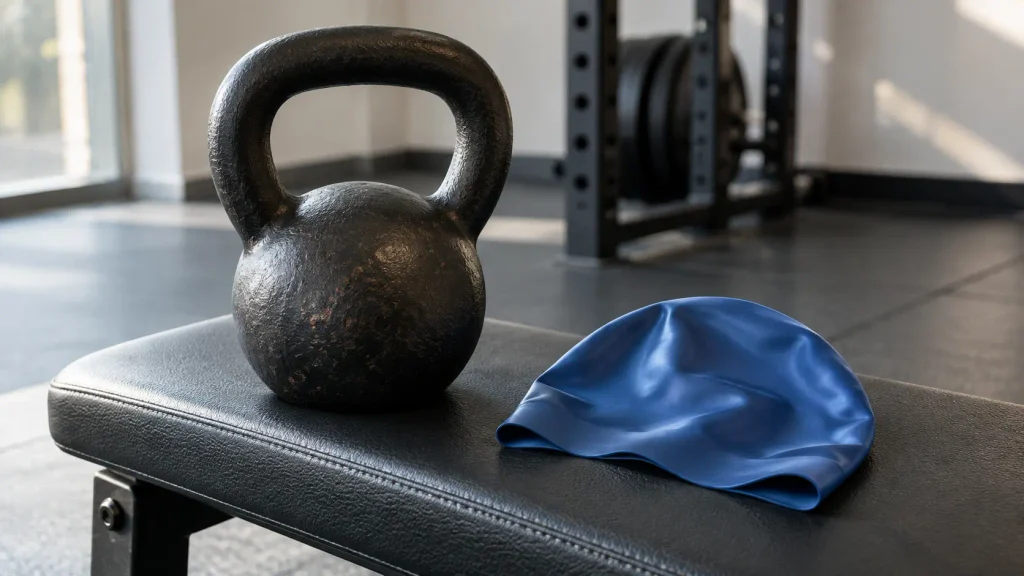
Part of what fuels the CrossFit vs triathlon divide is that the two communities have historically drawn from different populations, which shapes how each group perceives the other’s fitness. CrossFit’s gym-based, community-driven model tends to attract people from general strength and conditioning backgrounds, while triathlon has traditionally drawn from single-sport swimming, cycling, and running backgrounds where volume and pacing discipline are already ingrained habits.
That difference in background — not necessarily a difference in underlying capacity — likely explains much of the mutual skepticism. A triathlete watching a CrossFit workout sees unfamiliar movement patterns and short duration; a CrossFitter watching a triathlon sees unfamiliar pacing discipline and none of the varied movement CrossFit prioritizes. Neither observation captures what the other sport actually develops.
How Sporting Organizations Are Bridging the Gap
The CrossFit vs triathlon conversation isn’t just happening informally between individual athletes — governing bodies and gyms are actively building bridges between the two. Triathlon Ireland’s partnership with CrossFit gyms to run taster sessions is a direct, organizational acknowledgment that CrossFit’s community and coaching model can serve as a recruitment pipeline into triathlon.
Similarly, the CrossFit Games’ periodic inclusion of swim, bike, and run elements signals an institutional recognition that pure aerobic endurance is a legitimate fitness quality worth testing, even within a competition built around broad athleticism. Neither organization is declaring the other’s sport inferior — they’re recognizing genuine overlap in what makes a well-rounded athlete.
What Elite Athletes Crossing Over Are Actually Finding
The recurring theme across athletes who’ve tested the other discipline isn’t “my sport was better all along” — it’s specific, transferable lessons. Endurance athletes report benefits to power output, injury resilience, and mental toughness from CrossFit-style training. CrossFit athletes moving into triathlon report a genuine respect for the pacing discipline and aerobic patience that multi-hour endurance racing demands, a skill CrossFit’s short, intense format rarely develops.
What This Means If You’re a Hybrid Athlete
The CrossFit vs triathlon debate is largely irrelevant if you’re already training both qualities deliberately. Our 12-week hybrid training plan is built around exactly the combination both camps are independently rediscovering: structured strength and power work alongside genuine aerobic base development, rather than treating them as competing priorities.
The growth of formats combining both — covered in our piece on hybrid fitness competitions — reflects the same conclusion elite athletes are reaching individually: the strongest case isn’t CrossFit versus triathlon, it’s both.
FAQ
Do CrossFit athletes have good aerobic fitness?
Research on elite CrossFit athletes found no significant difference in VO2max compared to endurance specialists in men, and higher relative VO2max in women, challenging the assumption that CrossFit lacks a real aerobic component.
Do triathletes have functional strength?
Triathletes maintain physiological capacities comparable to single-sport endurance athletes despite splitting training across three disciplines, and a growing number incorporate dedicated strength training to improve running economy and reduce injury risk.
Which is harder, CrossFit or triathlon?
They demand different qualities — CrossFit tests broad strength and power adaptability over short durations, triathlon tests sustained aerobic efficiency over hours. Neither difficulty measure translates directly to the other.
Can I do both CrossFit and triathlon training?
Yes. Structured hybrid training that combines strength and power work with genuine aerobic base development is the same principle both disciplines are independently incorporating from each other.
Is CrossFit good cross-training for triathletes?
Several elite triathletes have reported specific performance benefits from CrossFit-style training, particularly for power output and injury resilience, though it doesn’t replace the aerobic base built through swimming, cycling, and running.
Quick Action Plan
- Identify which quality your current training actually prioritizes — power and strength, or aerobic endurance — rather than assuming your discipline covers both.
- If you’re endurance-focused, add structured strength work rather than treating it as optional cross-training.
- If you’re strength/power-focused, build a genuine aerobic base using easy-paced cardio rather than only high-intensity conditioning.
- Look at what elite crossover athletes specifically credit the other discipline for, and test whether that gap applies to your own training.
- Stop treating “CrossFit vs triathlon” as a competition — both disciplines validate the same hybrid training principle from different directions.
Bottom line: CrossFit vs triathlon isn’t a debate with a winner — it’s two disciplines that have quietly been converging toward the same hybrid training principles for years. For a program that combines both qualities deliberately, see our Hybrid Disciplines & Athlete Stories section.












Leave a Reply